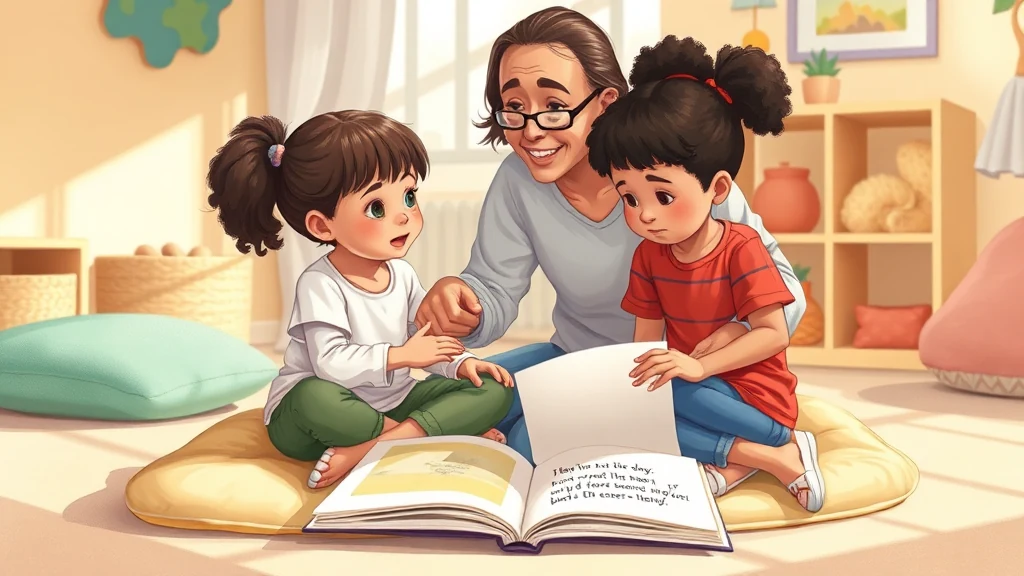
Using Personalized Stories to Support Sibling Dynamics and Bonds
Do you remember the feeling? Not the big, dramatic, movie-moment change, but the little, thick, heavy feeling that hangs in the air after a major sibling conflict. One moment, the play room is filled with laughter-the sound of pure, unrestrained joy. The next? A sudden, sharp shift. A misplaced toy, an unwanted turn in a game, and suddenly, the atmosphere is thick with unspoken frustration, maybe even tears.
If you’re a parent navigating that emotional aftermath-the meltdowns, the eye-rolls, the subtle, simmering resentment of sibling rivalry-you probably feel completely overwhelmed. It’s not just about sharing; it’s about navigating two complex little human beings whose feelings are massive, and whose communication skills are still rapidly under construction. It feels like you need an instruction manual for the emotional side of family life.
We’ve all been there. The exhaustion of being the emotional referee.
But what if the solution wasn’t just more patience (though we need that, too!)? What if the solution was giving those complex, messy feelings a dedicated space-a safe, fictional sandbox-to play out?
What exactly is sibling rivalry in childhood?
First, let’s clear up a common misconception. Sibling rivalry isn’t simply a battle of “who gets more attention.” It’s a complex, natural part of growing up alongside someone else. It’s how children practice navigating their identity within a fixed family system.
They are learning:
- Negotiation: How to ask for what they want when a sibling already has it.
- Perspective-Taking: Understanding that their sibling has needs and feelings that are different from their own.
- Self-Regulation: The ability to feel intense anger or jealousy, and then cool down enough to use words instead of physical outbursts.
These are huge developmental leaps, and they are often messy.
Why do traditional methods struggle to ‘solve’ sibling conflict?
When we try to address these conflicts head-on-“Share your toys, or you’ll lose playtime!” or “Why did you hit him?"-we often fall into a pattern of immediate, reactive discipline. While necessary sometimes, these interventions tend to focus on the behavior (the hitting, the screaming) rather than the underlying emotion (the feeling of being overshadowed, the frustration of waiting).
We need tools that validate the emotion first, and then guide the behavior.
How do personalized stories offer a unique, gentle approach?
This is where personalized storytelling shines. It acts as a neutral, externalizing medium. When a child sees a narrative about two characters struggling to share a toy, or one who feels overlooked in a big adventure, they are experiencing a version of their own life-but it’s safe. It’s fiction.
Personalized stories don’t dictate that the conflict is “bad”; they validate that the feeling is real.
By customizing the narrative, we can tailor the “lesson” perfectly to the family unit. We can use the characters’ struggle to model empathy, conflict resolution, and sharing in a way that feels immediately relevant and deeply personal.
Quick Tip: Using Stories to Validate Emotion
- Name the Feeling: Instead of saying, “Stop crying,” try, “You look really frustrated right now.” Naming the emotion is the first step toward managing it.
- Model the Dialogue: Talk with your kids about how a character might feel. “Oh, when Leo took the swing, Mia must have felt sad and left out.”
- The Book as the Script: Use the book to pre-script these emotional conversations, making the abstract concept of “empathy” tangible.
When you are ready to create a story that speaks directly to your family’s unique bond and current challenges, you can start your personalized book in the studio.
What developmental skills do personalized stories teach?
Beyond just “sharing,” the process of engaging with these narratives helps build foundational life skills:
🧠 Emotional Vocabulary
Children often don’t know the difference between “mad,” “disappointed,” and “jealous.” A story can provide a precise vocabulary. Seeing a character express “frustration” versus “anger” gives the child a tool they can use when they are actually feeling it.
❤️ Empathy and Perspective-Taking
The ultimate goal of sibling stories is to shift the focus from “my feelings vs. your feelings” to “our feelings as a family.” By being immersed in a character’s perspective-the sibling’s-the child practices the crucial skill of stepping outside their own emotional bubble.
For deeper context on how emotional growth happens, check out our guide on beyond-the-story-how-personalized-books-foster-emotional-intelligence.
✨ Building Self-Efficacy and Confidence
Remember, even in conflict, the child remains a hero of their own story. When the narrative validates their uniqueness, even amidst family chaos, it boosts their self-esteem. They learn that their value isn’t diminished by a sibling’s success.
Practical Strategies for the Real World
Personalized stories are a phenomenal supplement to, not a replacement for, real-life parent-child coaching. Here are three ways to maximize their emotional impact:
- The “Before” Talk: Before reading, predict the emotions. “Today, we read about two squirrels fighting over nuts. Which emotions do you think they will feel?” This primes the brain for the lesson.
- The “During” Pause: Stop the reading at the moment of conflict. Ask: “If you were [Character A], what would you feel right now? And if you were [Character B]?” This makes it an immediate, collaborative lesson.
- The “After” Connection: Connect the book to your actual home. “Look, [Child A] acted like the bear in the book when they took the blanket. What could you use instead of yelling?”
Quick Tip for Emotional Reading Time:
- Use Props: When reading, use hands or stuffed animals to physically represent the characters and act out the emotion (e.g., a small, slumped shoulder for disappointment).
- Ask the “Why”: When discussing conflict, always ask, “Why do you think that character did that?” instead of “Why did you do that?” This encourages hypothesis and deeper thought.
- Focus on the Resolution: Even if the story starts with a meltdown, spend equal time celebrating the moment they found a peaceful resolution.
Can Storytelling Actually Help with Tough Family Dynamics?
The answer is a resounding yes. Using narrative to address sibling conflicts helps remove the immediate heat of the argument and allows the family to analyze the underlying issues.
For more general approaches to family communication, you might find this guide on using-personalized-stories-for-sibling-dynamics helpful, detailing multiple ways to weave these topics into a narrative.
The ultimate goal of these stories is to give parents and children a shared, safe language that goes beyond “Mine” and “Yours,” allowing them to talk about “We.”
How are you incorporating personalized stories into your family’s life? Share your favorite reading traditions below!