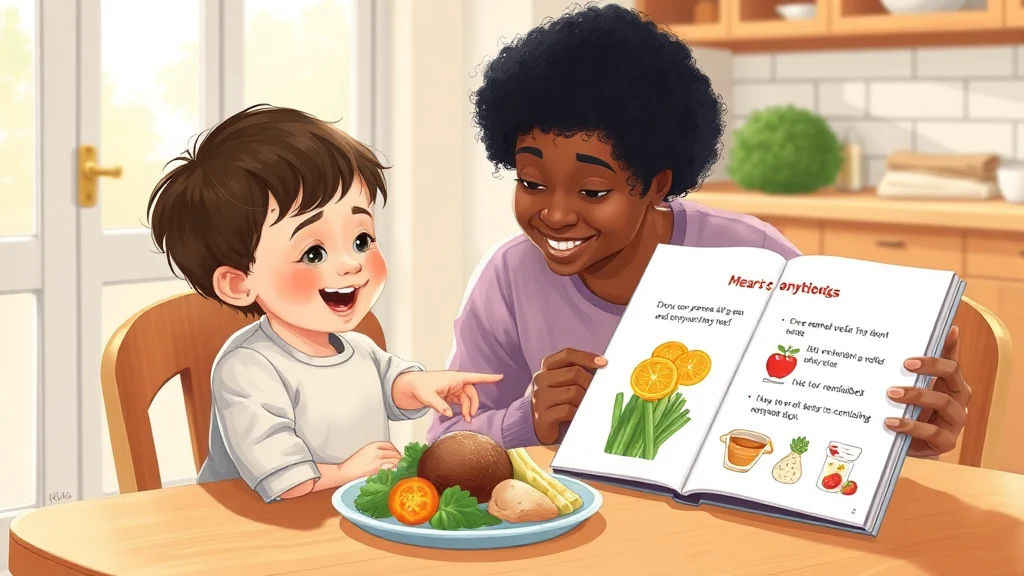
Understanding Your Child’s World: Storytelling When Food is Involved
Do you remember the feeling? Not the big, dramatic, cinematic moment of a health diagnosis, but the slow, subtle thrum of anxiety that seems to hang in the air after a revelation. Maybe it’s finding out your child has a severe food allergy. Suddenly, every seemingly simple activity-a birthday party, a school cafeteria, even a trip to Grandma’s house-is overlaid with a layer of worry.
We know that the emotional weight of food restrictions is massive for parents. But how does that weight translate into the language a young child can actually process?
For a child, complex medical terms like “anaphylaxis” or “IgE” are simply noise. They don’t make sense. What they understand, however, is routine, community, and safety.
This is where storytelling becomes nothing short of a superpower. A personalized, narrative approach doesn’t just teach your child what they can’t eat; it teaches them how to be safe, confident, and empowered in a world full of unknowns.
Why is a Narrative Approach Better Than Just Listing Rules?
When we talk about allergies and restrictions, we are talking about far more than just food lists. We are talking about emotional regulation, social skills, and safety protocols-all wrapped up in one confusing package.
If we simply hand a child a booklet of rules (“Don’t touch this. Don’t eat that.”), they might memorize the words, but they won’t internalize the feeling of safety. Stories, by contrast, provide emotional context.
A story lets us externalize fear and uncertainty. We can create a character-who looks and feels like your own child-who is not just allergic, but who is also brave, resourceful, and ultimately, in control of their own body.
Instead of focusing on the danger, we focus on the solution and the power.
How Can Stories Make Complex Topics Simple for Kids?
The goal isn’t to scare the child into fear of food; it’s to build a robust, healthy understanding of their body and what protects it.
1. Creating Predictability (The Power of Routine): Kids thrive on routine. By building a story around a common scenario-like a school lunch or a family dinner-and detailing the safe steps within that narrative, we take the chaos out of the situation. The story becomes a predictable map for a potentially confusing environment.
2. Teaching Agency and Empowerment: A personalized story gives your child agency. They aren’t passive victims of a bad meal or a bad situation. They are the hero who knows their body and who knows how to communicate their needs. The narrative shifts the focus from “What’s wrong with me?” to “How can I take care of me?”
3. Building Empathy for Others: This is perhaps the most vital skill. If your child is the hero, the story can also teach them how to advocate for their friends and family. They learn to spot hidden allergens, to speak up calmly, and to understand that caring for others is part of being a good friend.
This ability to tackle big life subjects-whether it’s allergies, moving house, or learning a new skill-is one of the biggest strengths of storytelling. If you want to learn more about how narratives help children grasp complex concepts, you might find our guide on stories that help your child understand the world very insightful.
When you’re ready to transform these critical health conversations into a tangible, personalized storybook that feels like a comforting guide, you can start building your child’s book right in the console.
What Practical Elements Should Your Allergy Story Include?
When crafting a personalized book, don’t just mention the allergies-show them.
- The Sensory Details: Describe the safe food vividly. Don’t just say “apple.” Describe the crunch, the color, the smell, and how it makes the character feel joyful. This connects the concept to pleasure, not fear.
- The Action: The child character must act. They must confidently tell an adult, “I cannot have that,” or they must correctly identify a safe ingredient. Action beats exposition every time.
- The Support System: Crucially, the book should validate the support structure-the parent, the teacher, the safe friend. This helps the child feel confident that they are never alone.
Parenting Tip: Turning the Conversation into Play Instead of reading the story and then ending the discussion, turn it into a role-play. Ask your child: “If we were at the park today, what’s the one thing your hero character would say to the vendor?” This activates the skills they learned from the story in a low-stakes, fun way.
Quick Takeaways for Making Allergy Education Fun
- ✅ Use a Hero: Always keep your child as the central, competent character.
- ✅ Focus on Empowerment: The narrative goal should be confidence, not avoidance.
- ✅ Validate Anxiety: Acknowledge that it’s okay to feel nervous; the story is the tool that helps manage that feeling.
- ✅ Keep it Repeated: Read the book often, especially before new environments (like a playdate or a field trip).
Beyond the Pages: Building a Holistic Understanding
While personalized books are incredible for turning abstract rules into concrete, safe narratives, remember that they are one powerful tool among many.
The journey of understanding allergies requires a full support system: routine, communication, and positive role modeling. By using a personalized book, you are giving your child a tangible, self-written blueprint for navigating the world. It’s a way of saying: “You are capable, and you are protected.”
A personalized story is a beautiful way to make sure that every milestone-and every routine meal-is treated not just as a day, but as a chapter in your child’s ongoing, resilient story.