Turning Worries into Wonder: How Personalized Stories Help Kids Handle Childhood Anxiety
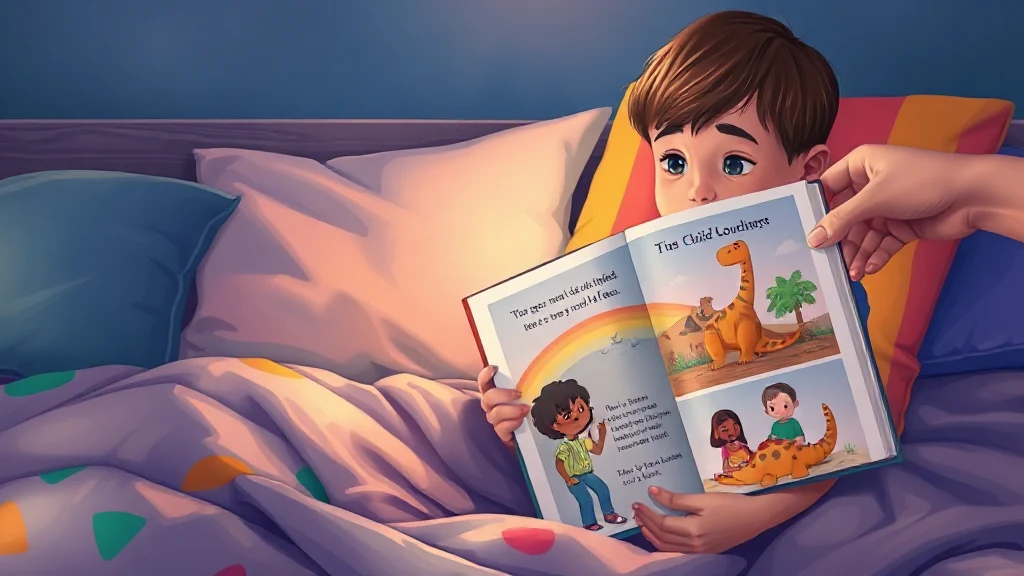
It’s quiet in the house, except for the occasional muffled sniffle. Your child is curled up under their dinosaur duvet, hugging a pillow so tightly it looks like they might actually merge with it. You know what’s coming: the big “Are you sure you don’t want to just stay up all night?” routine that signals anxiety over the impending separation of sleep, and maybe, everything else.
I hear this scene-or variations of it-constantly from parents, and frankly, it gets to me a little bit every time. Anxiety in children isn’t always a dramatic tantrum or visible panic attack; sometimes, it’s just that invisible weight-the low hum of worry that makes bedtime feel monumental.
As makers who pour our hearts into creating personalized stories, we often find ourselves at the intersection of creativity and emotional development. We want to talk about how giving your child ownership over their story-making them the hero, literally-can be one surprisingly effective tool in helping them navigate those tricky waters of childhood anxiety.
Understanding the ‘Why’ Behind Childhood Worry
First, let’s address something essential: Anxiety is not a bad behavior, and it is certainly not just “being dramatic.” It is your child’s internal alarm system sounding a very loud warning signal about perceived danger or uncertainty (Mayo Clinic). This system doesn’t distinguish well between a lost teddy bear at school and a real emergency; both register as threat.
Because these feelings are often abstract-how do you draw ‘worry’? How do you illustrate the concept of ’letting go’?-it’s tough for children to process them. They feel them in their bodies, and sometimes that’s all they can communicate.
This is where specialized tools come into play, including professional therapeutic techniques like Narrative Therapy (autismcenterforkids.com). These methods don’t aim to eliminate worry; they teach the child to identify it, externalize it (“The Worry Monster” instead of “My Fear”), and ultimately, to build coping narratives that restore a sense of predictability and control.
(A note of caution: Please know that our personalized books are designed as wonderful educational supplements and tools for discussion. They should never replace the care of a licensed therapist or pediatrician.)
The Magic of Narrative: Stories That Reframe Fear
What does “narrative therapy” really mean in simple terms? It means using story-a structured account of events-to change how we make sense of our emotional experiences. Instead of being overwhelmed by an emotion, the child learns to sit with that feeling and talk it through, making themselves the active participant who solves the problem within the safety of the book’s world.
When a child reads about a character facing a challenge (say, starting at a new school or sleeping alone), they aren’t just listening; they are actively practicing emotional resilience in a risk-free space.
Social Stories™ are a fantastic example of this in action. They are structured narratives that teach specific social skills and expected behaviors for stressful transitions-like what it feels like to say goodbye at the drop-off line, or what routine helps them feel safe when lights go out. The story provides script and expectation where anxiety has provided ambiguity.
How Personalization Changes Everything (It’s Not Just a Name Swap)
This is the pivotal moment where personalized books do something uniquely powerful compared to reading any book.
A generic picture book about conquering bedtime fears might be helpful, but it involves a character that isn’t them, in a room that doesn’t look like their actual bedroom. Reading it creates distance; it feels observational.
When we personalize the story, two things happen:
- High Relatability: The child sees their own name, their favorite toy, the layout of their own treehouse, and their actual parent in a narrative structured to solve a problem they face. This instant ownership deepens engagement and emotional resonance tenfold.
- The Solution is Internal: When the main character-the reader-successfully uses coping skills (like deep breaths or asking for help) within the book’s context, the child isn’t just rooting for an imaginary person; they are seeing their own abilities depicted.
We recently worked on a story with a parent who was concerned about their five-year-old starting kindergarten separation anxiety. Instead of general advice, we wrote about the character going through the very process: saying goodbye at the gate, feeling tearful, and then remembering the special coping skill-a pocket rock-that made them feel grounded until pick-up time. The parent told me that reading it aloud the night before school felt like a rehearsal for emotional success.
It helps children visualize what to expect when the world feels fuzzy or overwhelming. This practice of mapping out scary transitions-whether it’s visiting an aunt who lives far away, going on a long car trip, or just getting ready for bed-is incredibly grounding.
If you are looking for ways to start weaving these customized feelings and routines into fun narratives, creating a personalized book through our console can be a gentle first step in giving your child the tools to understand their emotions better.
The Power of Discussion (The Role of the Parent)
I want to stress that while the book is magical, the real work happens between pages-in the dialogue around it.
The most powerful moment I witness is not when the story ends, but in the pause after a chapter break. A parent might point at an illustration and ask, “When you feel this worried about going to school, what does your tummy feel like? What could help you, like [Character Name] did?”
This turns reading into active emotional processing. The personalized nature of the book gives you immediate, highly specific jumping-off points for these critical conversations. You’re not talking generally about ‘feelings’; you are pointing to their feeling, in their house, solved by their hero.
A parent once told me that before we started reading through their personalized “Fear of the Dark” story, bedtime was a battleground. Now? They can read it aloud and actually chuckle at how silly the little flashlight character got when they finally remembered to turn on the main light switch-a genuine sense of shared victory that is unmatched.
Giving Voice to Worry, One Page at a Time
Ultimately, personalized stories are designed to give language and visibility to the invisible weight of worry. They prove something vital: feeling anxious is okay. Being overwhelmed by it doesn’t have to be. By externalizing those worries onto paper-by creating a structured narrative where they can be met, understood, and overcome-we equip our children with tangible coping mechanisms built on love and imagination.
This process of translating abstract emotional struggle into concrete, visual steps is profoundly empowering for both the child and the parent. It turns a scary “What if?” into a manageable “How do we fix this?”