It’s the familiar, weary sigh you let out when your child pushes a piece of broccoli away for the third time in a row. You know the routine: the negotiation over “just one bite,” the careful management of your own frustration, and the looming fact that they won’t be hungry much longer if the standoff continues.
For many parents, mealtime can feel less like a shared family moment and more like a high-stakes negotiation. When a child is a picky eater, it’s often not about being “difficult” on purpose; it’s about a lack of familiarity or an overwhelming sensory experience with new foods.
How can we break the cycle of power struggles at the table? One of the most effective-and gentle-ways to do this is by moving the conversation from the dinner plate to the pages of a book.
Why Storytelling Changes the Dynamic
When we use stories to address picky eating, we shift the focus from “you must eat this” to “let’s explore this world.” Instead of a direct confrontation with a vegetable or a new texture, the child engages with it through imagination.
Why does this work?
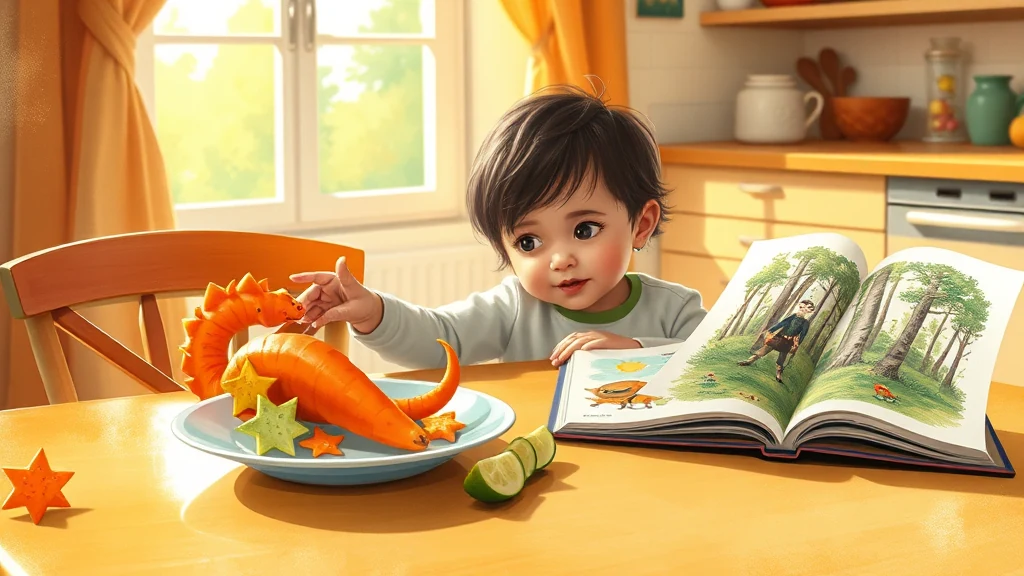
- Safe Exploration: A character in a book can “try” a dragon-shaped carrot first, taking the pressure off the child.
- Curiosity over Compliance: Stories spark “What if?” moments, making new foods seem like parts of an adventure rather than demands.
- Reduced Pressure: When children feel pressured to perform (eat), they often retreat. Narrative creates a buffer zone where they can feel safe enough to be curious.
Quick Tip: Try focusing on “food bravery.” Instead of expecting them to eat, celebrate them for touching, smelling, or even just looking at the food while you read about a character doing the same.
Creating a “Hero” Narrative for Mealtime
The most powerful way to engage a child is to put them at the center of the story. When a child sees themselves as the hero-bravely exploring a magical forest or preparing a feast for friends-they begin to internalize those feelings of confidence and curiosity.
You can even use these stories to bridge the gap between fiction and reality. For example, if your child is terrified of “green things,” you can create a story where they are a hero who learns that green items (like peas or spinach) give them special powers of strength. When they eventually sit down to eat, you aren’t just offering food; you’re offering them the chance to use their “superpowers” like the character in their favorite book.
When you’re ready to turn these culinary adventures into a story starring your child, you can start your book in the studio to create a custom tale they’ll want to read every night.
Making Mealtime Interactive
To get the most out of this approach, try connecting the “hero” journey directly to the dinner table. Here are a few ways:
- The Quest for Ingredients: Tell them that the hero needs “crunchy orange crystals” (carrots) to fuel their journey.
- Character Voices: Have your child “act out” the parts of the characters as you talk about what they’re eating.
- Visual Mapping: If they are hesitant about a new dish, describe it using the vivid imagery from the book’s illustrations first.
If you want to explore more ways that narrative builds confidence and manages expectations, check out our guide on how personalized books build self-esteem and confidence.
Turning “No” into “Maybe Next Time” (But with a Story)
The goal isn’t to force a win today, but to build a foundation for tomorrow. By using stories, you aren’t just trying to get them to eat a specific meal; you are building their vocabulary for bravery and curiosity.
Next time they push the plate away, don’t see it as a defeat. See it as an invitation to go back into the story. Maybe today they didn’t want to try the beans, but they did enjoy being the hero of the story who was preparing the feast. That progress is still a win.
Ready to make your child the hero of their next adventure? Create your personalized book today and turn every mealtime-and every milestone-into a story they’ll cherish forever.