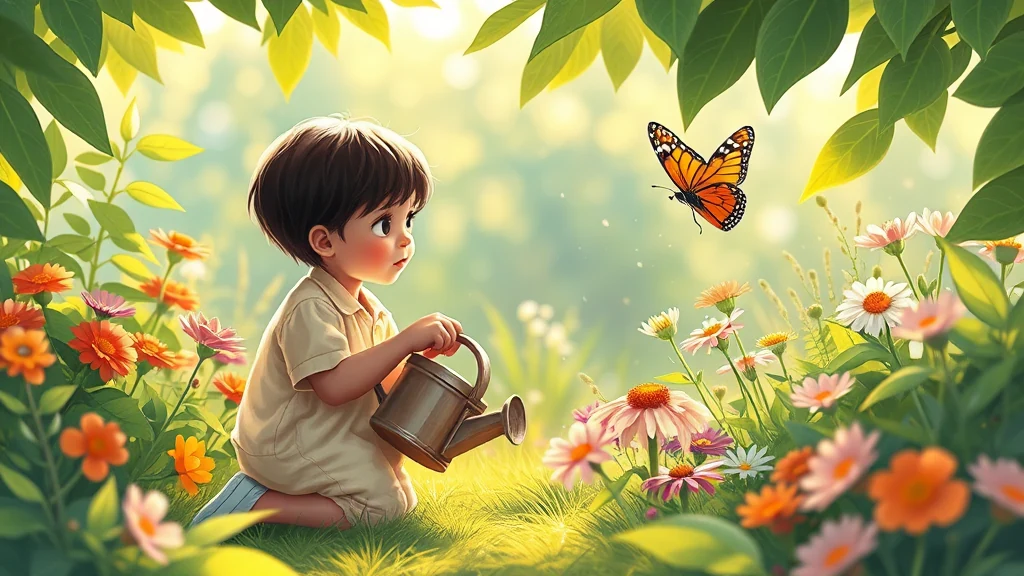
Imagine your child standing in the backyard, eyes wide with wonder as they watch a bumblebee navigate through a patch of wildflowers. They point at the bee and ask, “Why is he so fuzzy?” In that moment, you aren’t just looking at a bug; you’re looking at an opportunity to spark a lifelong bond with the planet.
As parents, we often worry about how to explain “big” problems to small people. How do we talk about conservation or the importance of protecting our oceans without making it feel like a heavy, frightening lecture? The answer lies in moving from abstract concepts to personal stories.
From Awareness to Empathy: The Power of Narrative
When children are very young, they don’t process data. They don’t need to know the specific percentage of plastic in the ocean or the exact temperature fluctuations of the last decade. Instead, they learn through empathy-the ability to feel for another living thing.
In my work creating personalized books, I’ve seen how much more impact a story has when it centers on a relationship. When a character helps a struggling forest find its balance, or protects a “home” from being cluttered by waste, the child isn’t just learning about ecology; they are practicing kindness.
One technique that works beautifully is “animism”-giving human-like qualities to nature. By letting children imagine that a tree has stories to tell or that a river feels proud when it’s clean, we bridge the gap between “the environment” as a concept and “nature” as a friend.
Giving Your Child Agency
One of the most common hurdles in environmental education is the feeling of helplessness. We don’t want our kids to feel overwhelmed by global issues. The goal is to give them agency.
Agency is the belief that “I can make a difference.” You can foster this through:
- Action-oriented storytelling: Stories where the hero solves problems locally, like planting a seed or starting a compost design.
- Nature scavenger hunts: Turning a walk in the park into an adventure to find “hidden treasures” like specific types of leaves or stones.
- Tangible connections: Letting them help water the garden or choose which flowers to plant.
By turning environmental care into a series of small, heroic actions, you move from teaching a lesson to building a habit. You can start this journey today by creating a personalized book where your child is the hero of their own eco-adventure at https://makemybook.app/en/console to see how they can protect and nurture the world around them.
Why Personalization Changes Everything
The magic of a personalized book is that it removes the “observer” barrier. In a standard book, your child is watching a hero in a different land solve a problem. In a personalized story, your child is the hero.
When they see their own name and likeness on the cover as the protector of the woods or the guardian of the sea, it creates an immediate emotional hook. It transforms “The Environment” into “My Neighborhood.” This type of narrative engagement is a powerful way to build confidence and self-esteem as they take on these roles.
I’ve noticed that when children see themselves in a story, their engagement spikes. They don’t just read the page; they inhabit it. They begin to internalize the values of the narrative-responsibility, care, and stewardship-because those values are being modeled by them.
Practical Ways to Start Today
You don’t have to wait for a specific milestone to start these conversations. You can weave environmental stewardship into your daily routine using these three pillars:
- The Local Lens: Talk about the park down the street or the birds that visit your windowsill rather than distant continents. Make it real and reachable.
- Narrativeed Rituals: During bedtime, frame your discussions around “helping” our friends in nature. “How can we help the birds stay cozy this winter?”
- Celebrate Small Wins: Every time they recycle a bottle or pick up a piece of litter, treat it like a superpower. They aren’t just cleaning; they are defending their kingdom.\n By weaving these narratives early on, you aren’t just teaching them about nature-you’re raising a generation that feels a deep, personal responsibility to protect it.
We believe that every child has the potential to be a guardian of our world. It starts with a single story, and sometimes, the most powerful way to tell that story is by putting your child right at the center of it.