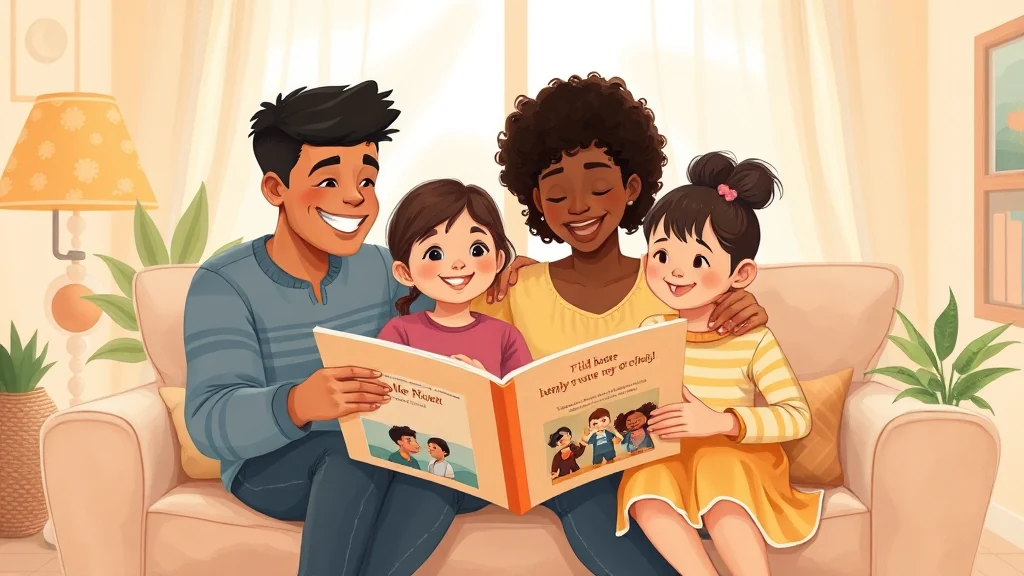
Beyond Milestones: Using Personalized Stories to Navigate Family Changes
The moment a family faces a big transition-divorce, moving to a new city, a blended family-the feeling in the air can feel thick, unstable, and unpredictable. For children, whose entire sense of security is often tied to routine, these shifts don’t just change where they live or who they spend time with; they change the fundamental story of their life.
It’s a confusing mix: they might feel powerless, worrying that the change is somehow their fault, or simply overwhelmed by the ‘wobbliness’ of it all.
This is where the role of narrative becomes so crucial. We often talk about reading books for milestones-the first day of school, the first pet. And those are huge, wonderful moments. But navigating the tectonic shifts of family structure requires a different kind of storytelling, one that meets emotional complexity head-on.
Why the Narrative Container Matters When Things Break
When a child’s world loses its predictable framework, their internal emotional landscape can feel like it’s spinning. The research is clear: big changes make children feel “small and powerless” (Fableau). They are absorbing complexity far beyond their developmental stage-thoughts about fairness, loyalty, and continuity.
Books, in this context, are more than just entertainment; they are narrative containers. They provide a safe, predictable space where a child can see their difficult emotions-the sadness, the anger, the confusion-represented by a character who is also struggling. They show the child, through art and story, that big, messy feelings are normal.
We need to reassure them that the turbulence happening outside the book pages is not a reflection of their worth or their ability to love.
A parent once told us, “My son was terrified that if he spoke up about his feelings, it would make the co-parent fight harder.” That feeling-of needing to suppress the difficulty of the situation-is what stories can gently dismantle.
The Power of Being the Hero of Your Story
Many general children’s books exist to acknowledge change, which is helpful. But when a family undergoes structural upheaval, the child needs to feel ownership over their emotional process. They need to be the stable point within the narrative, the one person whose journey matters most.
This is the profound difference that personalized storytelling can make.
By making the child the central character-the hero whose name, interests, and appearance are woven into the text-you achieve something deeper than simple acknowledgment. You are giving them a unique, stable narrative anchor. They are not just reading about a child who moves; they are reading about them successfully navigating the move, the adjustment, and the complexity of loving their family in its new form.
This process helps normalize the reality that they are resilient, regardless of the external chaos.
I remember working on a personalized book with a family whose life had shifted dramatically due to relocation. The child was apprehensive, worried about leaving their old friends behind. In the personalized story, we focused not on the loss of the old life, but on the discovery of a new, exciting part of the new city-a neighborhood park, a different kind of shop, a unique local ritual. The child wasn’t just receiving a book; they were receiving a map and a declaration of identity for their new life.
The process of anchoring a narrative around their specific life experiences can feel overwhelming-what topics should be included? How do you make it feel specific enough to resonate? If you want to explore how to turn your child’s unique, current experiences into a narrative that celebrates their strength, you can start creating a personalized book at https://makemybook.app/en/console.
Beyond the Words: Supporting the Inner Life
It is vital for parents to remember that books are a tool, not a cure. They supplement the work done at the table, during the bedtime routine, and in the car.
The single most important element in helping a child through family change is the parent-child relationship’s emotional security. Research consistently points out that a calm, cooperative environment between caregivers is strongly correlated with better child outcomes. Conflict is draining, and the child feels it acutely.
Your active, calm presence must remain the primary source of emotional grounding.
Consider this: Every night when the lights go out, and the world has felt shaky all day, you are building trust. When a parent once shared with us, “The moment my son realized the book was about us-about our whole imperfect, wonderful family-he finally let go of the guilt he’d been holding.” That moment, that realization of acceptance, was more profound than any single page.
When choosing or creating a book, I find it helpful to focus on the feeling you want the child to take away, not just the facts of the change. Is it safety? Curiosity? Resilience? That emotional core guides the narrative.
The Gentle Art of Acknowledgment
The core lesson in navigating family changes is acknowledgment. It means naming the fear, the sadness, or the difficulty out loud, in a loving way. It means validating the experience.
A few general tips when reading stories during periods of flux:
- Acknowledge the “Hard”: Don’t skip the difficult emotions. If the character is sad, point it out and say, “It looks like she feels very sad right now, and that’s okay.”
- Repetition is Comfort: Repetitively reinforce the core, unchanging truths: “We love you,” “You are safe,” and “Your feelings are valid.”
- Focus on Strengths: Direct attention to the child’s unique strengths-their kindness, their curiosity, their laugh. These are the constants.
And remember, the beautiful thing about personalized stories is that they allow you to reinforce these core, unchanging truths using the child’s own language and inside jokes, making the comfort utterly unique to your family.
The end of a book is never the end of the story. Life itself continues, with all its messy, wonderful plot twists. But by providing consistent, loving narratives-whether through books or simply through routine-we equip our children with the emotional vocabulary and the self-belief they need to keep turning the pages of their own beautiful, complicated, and resilient lives.