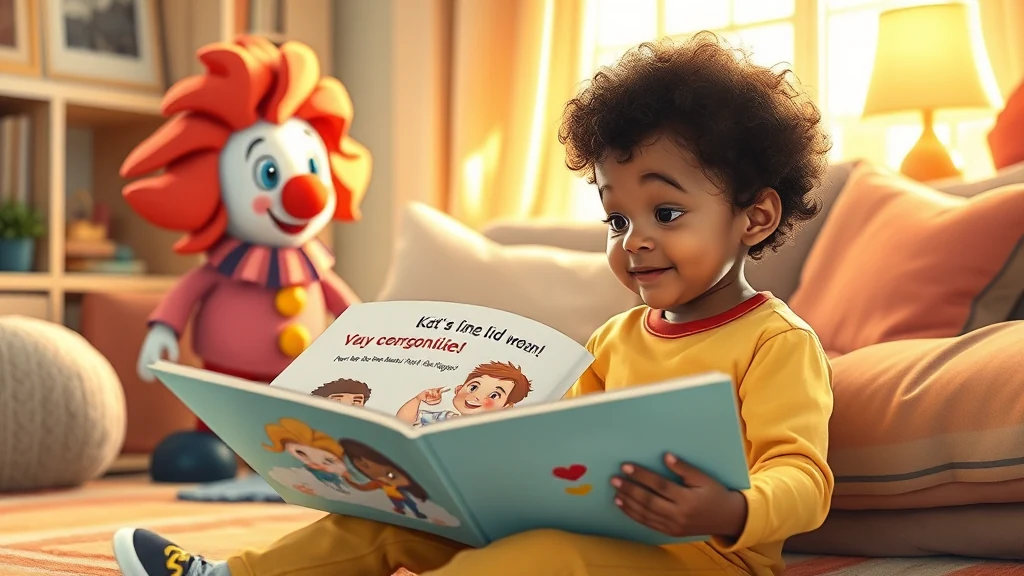
It’s the kind of moment that makes your heart sink just a little bit. You see it in their eyes-the way they shrink back when a performer in a mask approaches, or the way they hide behind your leg when a clown with oversized shoes enters the room.
You might feel a pang of guilt, wondering why they aren’t laughing along with everyone else. You want to tell them it’s just a costume, but for a child, “just” is a complicated word. To a small person, a face that doesn’t move like a human face-or one hidden behind layers of paint and fabric-isn’t funny. It’s unpredictable.
If your child feels unsettled by masks or costumes, you aren’t dealing with a “difficult” child. You are likely witnessing a very common developmental response to the “uncanny.”
Why the “Funny” Face Feels Scary
It might seem strange to us as adults, but there is significant psychological logic behind why children often experience fear around clowns and costumed figures.
Research into early childhood development suggests that children rely heavily on facial cues to navigate the world. We look at a person’s eyes, the curve of their mouth, and the tension in their face to understand their intentions. When a costume masks those features-especially if it distends them or replaces them with exaggerated makeup-it creates a “blank” signal.
Because we can’t see the person underneath, their movements feel unpredictable. For a child, an unpredictable stranger is a scary stranger. This isn’t about the child being imaginative; it’s about their brain trying to process a lack of information. It’s a biological response to something that looks almost human, but not quite-a concept often linked to the “uncanny valley.”
Moving from Fear to Friendship
When your child is afraid, the goal isn’t to “force” them to like the clown or “tough it out.” That just reinforces the anxiety. Instead, we want to bridge the gap between the unknown and the known.
We do this by giving them agency. When a child is the hero of their own story, they gain power over the narrative. Instead of being a passive observer of a scary mask, they become the protagonist who understands the person inside it. This shift in perspective is part of why how personalized books build self-esteem and confidence can be so impactful for children facing specific fears.
In our work with personalized books, we’ve seen how changing the context can shift a child’s entire emotional response. For example, you can create a story where your child is the one who discovers what’s under the mask-perhaps finding that the “scary” clown is actually just a person who loves magic and making people smile. By crafting a narrative where they are in control, they can begin to process these images in a safe, controlled environment. You can start this journey of building confidence by creating their very own adventure at https://makemybook.app/en/console where they become the hero who learns to be brave.
Practical Ways to Help at Home
If your child is struggling with these fears, try these gentle, story-led approaches:
- De-mystify the Costume: Talk about how costumes are like “clothes for the imagination.” Explain that a person inside a mask is just like them-they have a face underneath and they feel happy to be playing a part.
- The Power of Ownership: Let your child wear a costume first. When they are the ones in the mask, they realize they are still “them” on the inside. This sense of ownership can significantly lower anxiety when they see others in costumes later.
- Slow Exposure through Story: Use books to introduce the concept of characters in masks. Focus on stories where those characters are helpful, kind, and clear in their intentions.
The Role of Narrative
One thing I’ve found while developing our platform is that the most effective way to combat fear isn’t through “exposure therapy” in a high-stress environment (like a busy carnival), but through intentional narration.
When a child reads a book where they are the main character, they aren’t just looking at pictures; they are rehearsing how to feel brave. They get to experience the “scary” thing from the safety of your couch, with you by their side. They see that even if something looks strange at first, it can be understood and become part of a happy story.
A Note for the Parents: It is okay to let them stay behind you for now. There is no deadline for bravery. By giving them the tools to understand the world through stories, you aren’t just helping them overcome a fear of clowns; you are teaching them that they have the power to navigate the unknown with confidence and imagination.