Using Personalized Stories to Help Kids Understand Divorce and Co-Parenting
Do you remember the feeling? Not the big, dramatic, movie-moment change, but the little, thick, heavy feeling that hangs in the air after a major life disruption. The moment a family faces a big transition-divorce, moving to a new city, a co-parenting schedule that shifts-the feeling in the air can feel thick, unstable, and unpredictable. For children, whose entire sense of security is often tied to routine, these shifts don’t just change where they live or who they spend time with; they change the rules of their world.
When life feels like the script has been abruptly rewritten, it’s normal for kids to feel confusion, sadness, and sometimes, profound loss. Our natural instinct as parents is to simply say, “It’ll be okay.” But while that’s true, it often bypasses the child’s actual emotional experience. They don’t need reassurances; they need a narrative.
This is where personalized storybooks become a surprisingly powerful tool. They don’t magically fix the situation, but they offer a safe, controlled way for children to process complex, scary emotions and understand that even when the structure of their family changes, the core message of love and security remains intact.
Why is a Story So Powerful When Things Are Unpredictable?
When we talk about “stories,” we aren’t talking about simple bedtime reading. We’re talking about narrative structure-the framework that tells us what comes next, even if we don’t know when it will happen.
For a child, the world of emotions during a major transition (like divorce or co-parenting) can feel unstructured. The rules are changing, the time clocks are shifting, and the feelings are intense. Storytelling is a child’s most ancient tool for making sense of chaos. It allows them to take external, messy reality and fit it into a predictable, understandable sequence.
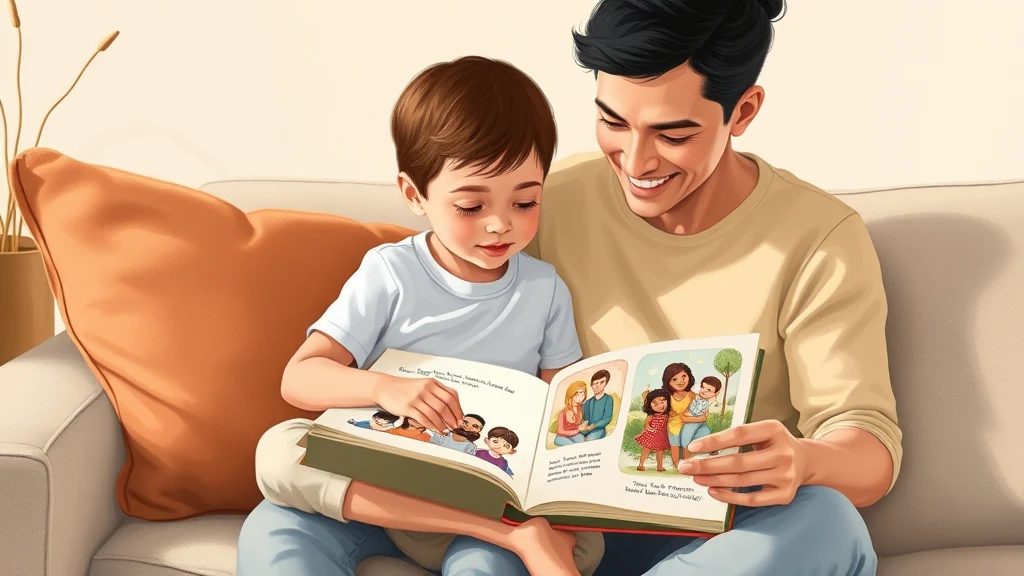
A personalized story can validate their experience because they are the hero. Instead of reading a generalized tale about “families,” they read their family’s story. This shift in representation is crucial. They see their specific feelings, their unique relationship with a parent, and the reality of the situation mirrored on the page.
Quick Tip for Emotional Processing:
- Validate First: Never dismiss a child’s feelings (“You shouldn’t be sad”). Instead, validate the feeling (“It sounds like you feel really confused right now, and that’s okay.”).
- Name the Change: Use clear, factual language: “Mom and Dad’s lives are changing, but our family love is not changing.”
- Ask for Their Narrative: Instead of leading, ask: “What do you think happens next?” to encourage them to take narrative control.
Giving Structure to the ‘Big Changes’
The specific topic of divorce or co-parenting often feels too nuanced or adult for a children’s storybook. But the best narratives aren’t necessarily about the legal details; they are about the emotional process.
When we use personalized stories for major life changes, we are teaching specific skills:
- Understanding Roles: The story can gently show how parental roles shift (e.g., “Sometimes Dad is at the Saturday house, and sometimes Mom is at the Sunday house, and both houses have enough love for you.”).
- Identifying Emotions: It provides a safe vocabulary for feelings like sadness, anger, or missing the old routine-feelings they might not feel comfortable sharing in real life.
- Building Continuity: The most important thing a child needs is to know what hasn’t changed. The story can consistently reinforce the immutable facts: “You are loved. You are safe. You are brilliant.”
When you feel ready to help your child process these deeply personal emotions through a creative narrative, you can start your custom storybook today.
The magic of these books lies in their ability to address these profound emotional topics while still making the child the center of the action. Because the story is theirs, the process of reading becomes an active act of self-definition and validation.
Beyond the Conflict: Maintaining Family Bonds
Co-parenting, especially after a divorce, requires a coordinated, sometimes emotional, effort from everyone involved. But the emotional life of the child is what matters most.
A personalized story can serve as a powerful tool for fostering understanding between both households. By focusing the narrative on the child’s perspective and their enduring love, the book keeps the focus on the bond, not the conflict. It reminds everyone involved that their shared priority is the child’s emotional security.
This need to validate specific, unique family dynamics is a core strength of personalized books. They help the child understand that even though “Mom’s house” and “Dad’s house” are physically separate, the love that connects them is one continuous story. If you want to explore how storytelling can help your child understand the complexities of your family structure, reading about navigating family changes in storytime is highly recommended.
📖 Quick Tips for Using Stories in Times of Change
- Keep it Short: Keep the narrative simple and focused on the child’s emotional safety. Long, complex plots can be overwhelming.
- Use Repetition: Repeat core messages of love and stability (e.g., “Even when things are different, we are always together”).
- Make it a Ritual: Schedule the reading time. It establishes a predictable moment of comfort that counters the unpredictability of the external world.
The Future of Storytelling
For parents managing major transitions, the personalized storybook is more than a keepsake; it is a tangible artifact of emotional work. It’s a testament to resilience, providing a structured, beautiful counterpoint to the messy reality of life changes.
If you are looking for a gentle, supportive way to start this process and give your child a sense of narrative control, exploring the options for creating a personalized story is an incredibly affirming step. It can give you, the parent, a creative way to manage your own complex emotions while simultaneously empowering your child.
Remember: You are not just buying a book; you are creating a shared memory and a comforting map for their heart.
Need help creating a customized narrative that reflects your family’s unique love story? Start designing your personalized book today.
Start Creating Here: https://makemybook.app/en/console