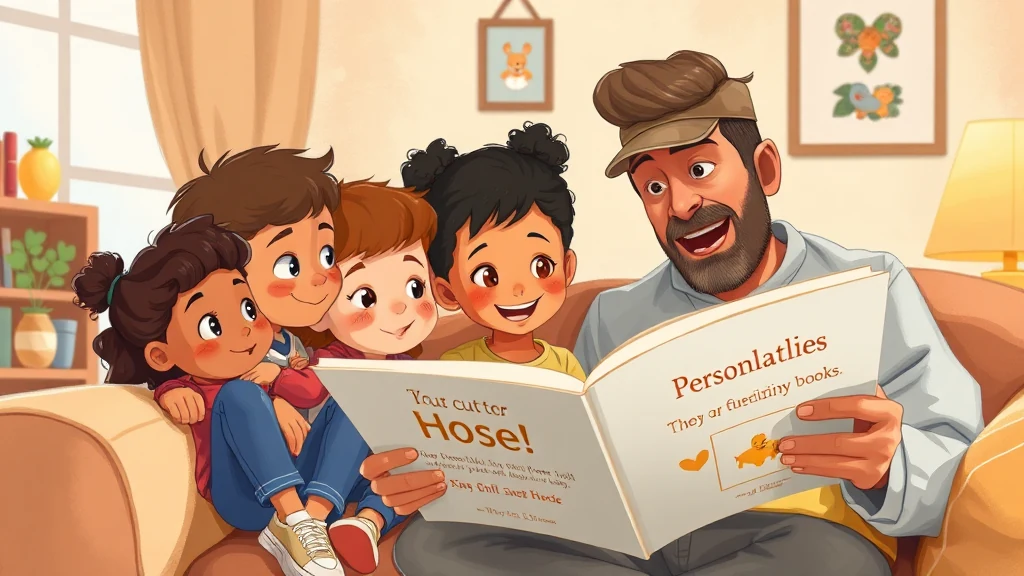
Navigating Sibling Dynamics: Personalized Stories for Stronger Bonds
The afternoon chaos in your house can often feel like a high-stakes performance. One moment, your children are engaged in deep, collaborative play; the next, a competition for attention flares up-a muttered disagreement over a toy, an eye-roll that cuts through the air, or the sudden feeling that one sibling’s triumph overshadows another’s.
If you’ve ever felt the familiar ache of managing intense sibling dynamics, you know that these relationships are complex, deeply formative, and often fraught with a powerful mix of deep love and competitive friction.
How do you read to them about sharing without sounding preachy? How do you validate both their individual feelings and the reality that they are constantly influencing each other?
The answer, increasingly, lies not just in talking to your children, but in giving them a safe, magical space to talk through it. Personalized storybooks offer exactly that: an emotional sandbox where they can practice empathy, build understanding, and see their unique family bond celebrated in narrative form.
Why Are Sibling Relationships So Hard to Navigate?
At their core, siblings are our first models for social interaction. They are the people who know us best, yet who can frustrate us the most. From a developmental standpoint, the relationship is a constant lesson in negotiation, boundaries, and self-worth.
When conflict happens, it’s rarely about the toy itself; it’s about the feeling underneath-the feeling of not being heard, the feeling of being misunderstood, or the struggle to establish an individual identity separate from a sibling unit.
Quick Tip for Parents:
- Name the Emotion First: When conflict arises, try validating the feeling rather than solving the problem. (“It sounds like you feel really frustrated right now.”)
- Model Conflict Resolution: When you disagree with your partner, let them see you using “I” statements.
- Acknowledge Uniqueness: Remember that every sibling relationship is unique; there is no single “right way” to parent them.
How Can Storytelling Teach Empathy and Conflict Resolution?
The best stories don’t just present problems; they model solutions. When personalized stories weave sibling dynamics into the narrative, they perform several crucial developmental functions:
- Externalization: They take messy, internal family feelings (like jealousy or frustration) and put them onto the characters’ shoulders. This makes the emotion manageable and less personal.
- Perspective-Taking: A good story allows Character A to understand why Character B might be upset, even if Character A feels justified.
- Narrative Validation: Most importantly, the book validates their specific relationship. It sees the two of them-not just “siblings”-but as unique heroes to the story.
Learning how to navigate these emotional currents together is a huge developmental leap. For more on building emotional understanding through literature, exploring can-personalized-children-books-encourage-empathy-and-social-skills can provide deeper insight.
🌟 Quick Tip for Reading Time:
- Pause for Feelings: When a character argues in the book, pause. Ask your child, “How do you think that character feels right now?”
- Predict the Next Beat: Before reading the resolution, ask them to predict how the characters might solve the conflict.
- Role-Play: After reading, briefly role-play the solution scene, using different voices for the characters.
Making Them the Center of the Narrative
This is where personalization shines. While general books address sibling themes, a custom book makes the struggle theirs.
Imagine a story where the main character is navigating a challenge with a sibling. The AI weaves in details about their specific inside jokes, their favorite shared activity, or a unique family tradition. Suddenly, the abstract concept of “sibling rivalry” becomes tangible, safe, and personal.
This deep level of recognition validates their actual, lived experience. It’s not just a story about siblings; it’s your story about your sibling experience.
Thinking about how well-written, personalized stories can resonate with your family’s unique life moments? Creating a custom book allows you to embed your family’s love and resilience into the very fabric of a story. You can begin designing a meaningful storybook featuring your child as the hero.
Beyond the Page: Using Stories for Real-Life Play
The personalized book is rarely the end goal; it’s usually the launchpad for much deeper play.
After the story concludes, the themes naturally spill into imaginative play. If the book centered on the sibling characters learning to cooperate to build a tower, your children will likely find themselves building towers and assigning roles immediately afterward. The book provides the blueprint for connection.
For even deeper insights into how routine shared reading builds foundational family security, check out our guide on personalized-books-for-family-bonding-and-parenting.
Key Takeaways: Personalized Stories for Family Life
- Validation > Teaching: The book validates the relationship first, making the lessons stickier.
- Agency in Conflict: It teaches that conflict is normal, but resolution is a skill they can master.
- Keepsake Value: The final book becomes a wonderful, physical memento of surviving a tricky phase together.
Conclusion: Crafting Lasting Family Memories
Sibling relationships are messy, imperfect, and infinitely valuable. They teach us who we are, who we are together, and how we survive life’s challenges.
By using personalized narratives, you give them a tool-a literary mirror-that helps them see their own beautiful complexity reflected back at them. It transforms a tough conversation into a shared, joyous reading ritual.
Ultimately, these books are more than just entertainment; they are emotional anchors, helping parents and children navigate the beautiful, challenging terrain of growing up together.
Ready to capture your family’s unique magic in a story they will treasure forever? Create a personalized book today and watch your child shine as the hero of their very own adventure.