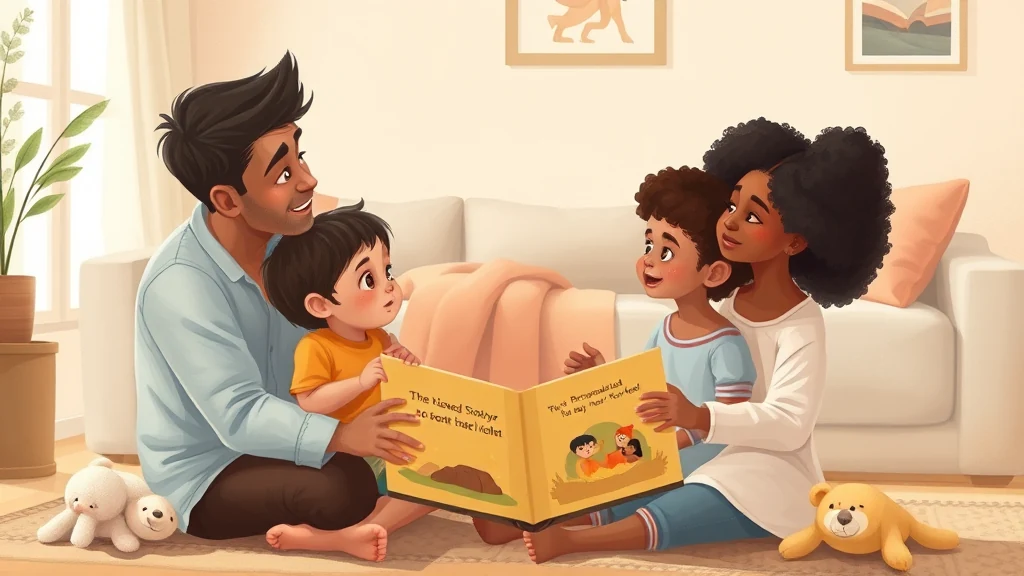
Personalized Stories for Explaining Major Life Changes
The air feels thick, doesn’t it?
It’s not the physical thickness of humidity, but the subtle, invisible weight that settles over a home after a profound shift. Whether it’s a move to a new neighborhood, the adjustment of a new co-parenting schedule, or the absence of a loved one-the routine the child relied on simply vanishes, and with it, often does their sense of security.
As a parent, you might feel like you’ve been handed a complex puzzle with missing pieces. How do you explain a big change like divorce, separation, or the loss of a grandparent to a child whose understanding of the world is still taking shape? Telling them the facts (“Mom and Dad are separating”) is necessary, but often, words feel hollow against the massive, swirling feeling they are experiencing.
This is where storytelling, especially personalized storytelling, becomes a profound parenting tool.
Why Are Complex Changes So Difficult for Children to Process?
For children, life is built on predictable patterns. They thrive on routine: the way the dinner table is set, the specific goodnight ritual, the predictable sound of the bus. These routines are psychological anchors. When these anchors are yanked away-by a move, a loss, or a family restructure-the child doesn’t just lose a routine; they lose a sense of predictability.
This instability often manifests in concrete ways: sudden tantrums, questions asked repeatedly, or general emotional withdrawal. They are trying to anchor themselves in a world that feels slippery.
This is why the emotional scaffolding that storybooks provide is so invaluable.
How Can Stories Make the Unknowable Feel Manageable?
A simple, generalized book can tell a child that a change happened. But a personalized storybook does something deeper: it tells them what happens next through the lens of their life.
- Validation: By seeing their specific house, their favorite stuffed animal, or their unique dynamic with a sibling woven into the narrative, the personalized story validates their experience. It says, “We know this is hard. We see you.”
- Control: Changes are inherently uncontrolled. Storytelling, however, restores a sense of agency. The child’s protagonist is the one making choices, navigating obstacles, and ultimately feeling safe again. This feeling of control, even in a fictional story, can be deeply calming.
- Language for Feelings: The most crucial benefit is the vocabulary. When a story describes the character feeling “sadness” or “confusion,” it gives the child a name for that big, thick, knot of worry in their chest. It externalizes the emotion, making it less overwhelming.
Giving Stories a Real-Life Edge
The abstract concept of emotional support becomes tangible when the child sees their life mirrored in the plot. For instance, if the family is moving, a custom story can name the new street, the pet they will miss, and the exciting, yet scary, first day at the new school. It transforms vague anxiety into a specific, actionable narrative quest.
When you’re ready to take the complex emotions of your family’s real life and turn them into a tangible story, you can start crafting your child’s personalized story.
What Are the Best Themes for Different Transitions?
The theme must match the child’s developmental level and the specific change they are facing. There isn’t a one-size-fits-all approach.
- For Divorce/Co-Parenting: Focus on the continuity of love, even when the physical routine changes. The core message must be: “Our love is not broken; it is changing shape.”
- For Loss: Focus on memory, connection, and the ongoing presence of the loved one. The story validates the pain while emphasizing the warmth of the connection that remains.
- For Moving/New School: Use themes of exploration, bravery, and discovery. The child is always the hero who gets to master the new territory.
Quick Tip: Story Themes to Consider
- The Journey: Treat the move or change like an adventure with a map (even if the map is metaphorical).
- The Superpower: Give the child a “superpower” like resilience or empathy that helps them overcome the challenge.
- The Inner Guide: Introduce a magical animal or friend who guides them through the confusion of emotions.
If you want to learn how to structure these narratives for maximum comfort and learning, check out our guide on navigating family changes in storytime or how our books help with general transitions in personalized-books-for-milestone-life-events-deep-dive.
Building Emotional Intelligence Through Narrative
It’s a skill, really. Emotional intelligence isn’t just about understanding that sadness is okay; it’s about recognizing the difference between disappointment and grief, and knowing what to do with that feeling.
How do personalized stories help build that complex toolkit?
By externalizing the conflict. The story character experiences the loss, the confusion, or the sudden shift. Because the emotion is represented in the book (and not just in the vague worry in the room), the parent and child can talk about it using precise language.
This helps bridge the gap between feeling big emotions and talking about them. This skill set is crucial for development across the board, which is why we also recommend learning about how personalized books support dealing with anxiety in children.
Beyond the Book: Real-Life Parenting Strategies
Narrative tools are powerful, but they work best when paired with real parental engagement.
- Keep the Tone Warm: Even when the story deals with heartbreak, the underlying tone of the story and the parent reading it must be unconditional love.
- Ask Open-Ended Questions: Don’t just ask, “Are you okay?” Instead, ask, “What part of the new situation feels the most confusing?” or “What does ‘safe’ look like to you right now?”
- Read it Together, Then Relate it: After reading a chapter, stop and ask, “How did [Character Name] feel when their routine changed? Where do you feel that in your body right now?”
🧭 Quick Tip: Using Books for Tough Talks
- Predictive Play: Before a big trip or change, let the child “rehearse” the scenario in the story.
- The Character Interview: Ask the child to adopt the character’s perspective and tell you what the character needs most in the situation.
- The Future Self: Write a personalized story about the child’s life after the change-a story of resilience and success.
Remember, the goal of these stories isn’t just to explain the change; it’s to give the child a safe place to process it.
The feeling of guiding your child through a life transition-one that feels uncertain and overwhelming-is one of the most challenging, and beautiful, jobs you will ever do. It’s a marathon, not a sprint.
If, in the midst of navigating complex family shifts, you want a tailored companion for those delicate conversations, starting with your child’s unique story can be the first step toward finding a rhythm again.