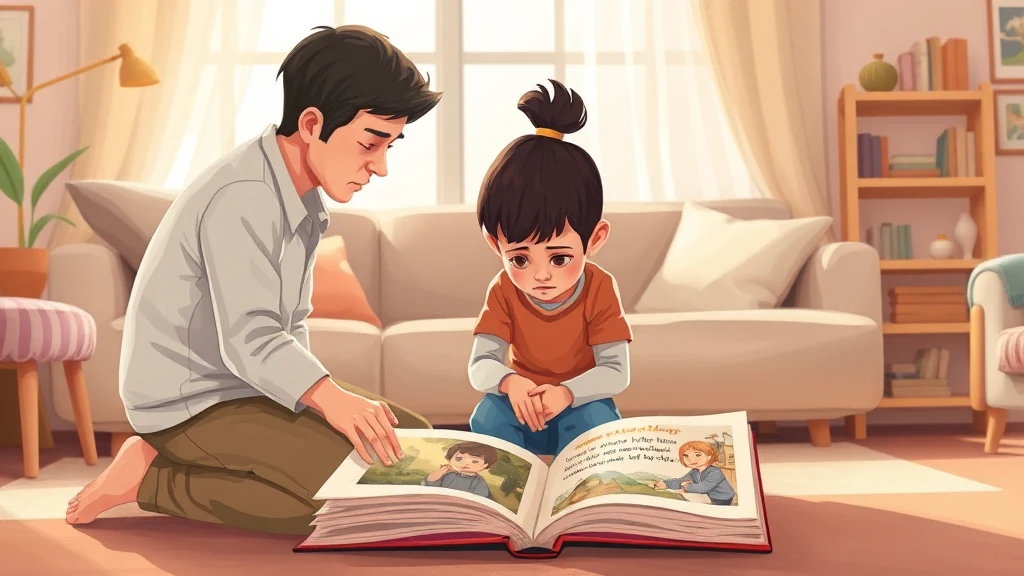
The air feels thick, doesn’t it?
It’s not the physical thickness of humidity, but the subtle, invisible weight that settles over a home after a profound shift. When a loved one is gone-whether they were a grandparent, a family friend, or a beloved pet-the world seems to lose its color, and the routines we relied on simply vanish.
As a parent, you feel like you’ve been handed a complex, beautiful puzzle, and the pieces are sadness, confusion, and a million small questions. You look at your child, whose questions are less about how they lost the person, and more about why the routine-the Saturday calls, the specific joke, the comfort of that familiar laugh-is broken.
I remember one time I was helping a family navigate the loss of a beloved family member. The conversation with the parents was hard, but the real work, the heavy lifting, happened during story time. How do you bottle up a massive, complex emotion like grief and package it into something a 6-year-old can safely process?
The truth is, there is no magical answer. But there is the power of narrative. And that’s where the magic of a personalized story comes in.
Why Do Storytelling and Narrative Help Kids Process Loss?
When a child is dealing with loss, their emotional system is in overdrive. They don’t process loss in neat, linear steps; they experience it as confusion, anger, intense sadness, and sometimes, just blank shock.
Narratives, especially those deeply customized to their life, offer a powerful scaffold. They give shape to the shapeless feeling.
Instead of being asked, “What do you do with this sadness?"-a question that has no simple answer-the story can allow the child to see sadness. They see a character grappling with a feeling, they see the emotional arc, and they realize that the big, overwhelming feelings they feel are normal, valid, and even part of the journey.
Here’s what the narrative format does that talking alone cannot:
- Externalization: It takes an internal, overwhelming feeling (“My favorite uncle isn’t here.”) and puts it outside, on the page. The feeling becomes a character, a challenge, or a chapter, making it manageable.
- Predictability in Chaos: Grief is chaotic. Story structures, even ones that acknowledge endings, are inherently predictable. They give the mind a rhythm and a map, helping the child find moments of reliable comfort within the unpredictable emotional storm.
- Validation of Specificity: Generic “stories about loss” can feel hollow. But a story about their loved one, a story that uses their family names, their house details, and the specific routines that were lost, confirms to the child: “This is your story. Your feelings are specific. And they are valid.”
Quick tip for Parents:
- Name the feeling: When reading or discussing the book, don’t skip over the hard words. Point out the words: “Look, here the character feels lonely,” or “His sadness looks like a big grey cloud.” Naming the emotion validates it.
- Focus on the memory: Don’t just focus on the absence. Dedicate story elements to the joy and the memory. “And even though Grandma isn’t here, she always left behind the memory of her terrible, perfect singing.”
How Personalized Stories Can Turn Grief Into Exploration
Most personalized storybooks, while wonderful for celebrating birthdays or achievements, are designed around “adding” something. When we are dealing with loss, we need stories that validate the “missing” piece.
This requires moving beyond simple customization. A truly effective narrative for grief must:
- Acknowledge the Reality: It cannot gloss over the loss. It must name it. “Life is different now because Grandpa won’t be here to fish with us.” This acceptance is the first step toward processing.
- Highlight the Connection: The book should focus on the impact of the loved one-the laughter, the lessons, the specific acts of kindness. This keeps the person’s spirit alive within the story’s positive residue.
- Offer a Way Forward: The story shouldn’t just end in sadness. It needs a gentle pivot. This pivot is the realization that while the loved one is gone, the love, the lessons, and the memories remain a permanent, glowing part of the child’s life.
Ultimately, the personalized story acts as a way to keep the person’s unique essence alive, not just in photographs, but in the language of love that the child is learning to speak.
If you are finding it difficult to translate these deep, complex feelings into a structured story, you don’t have to do it alone. You can start a beautiful, tailored story for your child here, making them the central character in a safe space to process what they’re feeling.
Building Resilience Through Shared Narratives
Grief can feel like a massive vacuum that pulls all the routine, all the comfort, and all the stability out of a child’s world. It can make them feel lost in a gigantic, undefined space.
This is where the power of a shared, customized story shines. It becomes a ritual of resilience.
When a parent and child sit down together-and this is key-and read a book created just for them, two things happen:
- The Child Gets to Be the Expert: They are the expert on their own heart. The book validates their unique relationship with the lost loved one, and their unique, messy, and profound feelings.
- The Bond is Reinforced: The physical act of reading together, even when the content is difficult, reinforces that no matter what the life has taken away, the parent’s presence and the bond between them are still here.
Personalized stories allow parents to frame these difficult moments: “This chapter is about how sad we feel. This chapter is about what we remember. And this final chapter is about how much love we still carry.”
✨ Quick Takeaway for Story Time:
- Be the Mirror: When reading, use open-ended questions: “How do you think the character feels right now?” This helps the child name the emotion themselves.
- Acknowledge the Gaps: If the story is about a routine that is gone (e.g., the nightly walk), acknowledge the gap: “The story used to include the walk by the oak tree. That feels like a part of our routine that is missing right now.”
- End with a Promise: Always end the story or reading session with an anchor of comfort-a promise for tomorrow’s cuddle, or a shared, safe, familiar activity.
Story Themes for Major Life Changes
This concept isn’t limited to the loss of a person. The need for a structured, validating narrative is present in all major life shifts.
Whether it’s moving houses, the arrival of a sibling, a parent’s new partner, or even a simple shift in the family’s daily rhythm, these transitions can destabilize a child’s sense of self.
A personalized story acts like a narrative guidebook for these confusing times, helping the child understand: “This is what is changing. This is what will not change (my mom loves me, my core self is safe). And this is how we will navigate the new pattern.”
For parents navigating these waters, remember that the greatest gift you can give your child isn’t the answer to “why”; it’s the shared, emotional container of storytelling that gives them permission to feel everything, safely, and together.
If you find yourself needing help structuring a story for a transition, from a missing pet to a move across the country, building a custom narrative is an incredibly powerful tool. You can explore creating a personalized story for your family here to start the dialogue.
Does this resonate with you? Sharing this guide with another parent who might be needing a gentler path through big feelings.