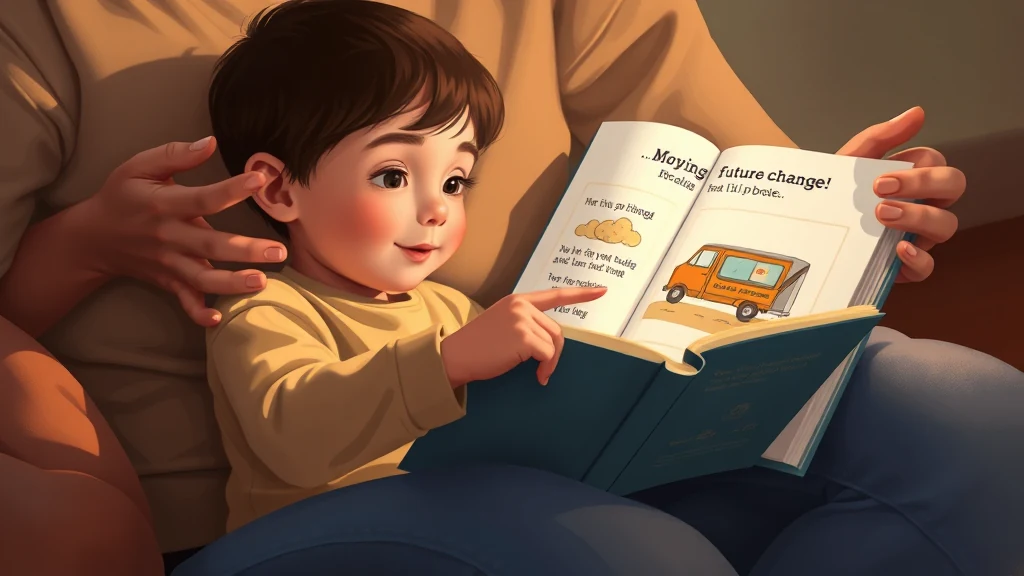
Personalized Stories for Explaining Major Life Changes
Do you remember the feeling? Not the big, dramatic, movie-moment change, but the little, thick, heavy feeling that hangs in the air after a major life conflict or disruption. One moment, the play room is filled with routine-the sound of pure, unrestrained joy. The next? A sudden, sharp shift. Maybe it’s a move to a new neighborhood, the arrival of a sibling, or learning that Mom and Dad are going to live in separate houses.
For parents, these moments trigger a confusing mix of logistics, fear, and overwhelming love. For children, whose entire sense of security is often tied to predictability, the sudden “unpredictable” can feel like losing their anchor. They don’t need a lecture on adaptation; they need a story. They need validation.
That’s where personalized storytelling steps in. It’s not just a fun way to read; it’s a deeply effective emotional tool that helps transform the overwhelming, amorphous fear of ‘what if’ into a structured, manageable narrative: “This is what happens, and you are going to be okay.”
Why Do Major Life Changes Cause So Much Anxiety in Kids?
When we talk about major transitions-whether it’s starting primary school, dealing with a parental separation, or learning about a new family structure-the root problem isn’t the change itself; it’s the loss of control and the gaps in vocabulary.
Children process the world through narratives. When the real world throws them a big, confusing curveball, their internal narratives crash. They ask, “When will it go back to normal?” or “Will I still be [me]?”
A personalized story bypasses the abstract worry and tackles the specifics: Your move, your new bedtime routine, your specific relationship with your new sibling. It allows them to practice the ‘story’ of the change in a safe, imagined space.
💡 Quick Tip for Parents: Before reading, acknowledge the feeling. Instead of saying, “Don’t worry,” try, “I know that moving feels really big and scary. Let’s see how [Character Name] felt when they moved to their new place.”
The Difference Between Generic and Personalized Narratives
A generic picture book might cover the theme of “moving,” but it uses characters and scenarios that aren’t theirs. Personalized books fix this.
- Representation and Ownership: When the story features their actual name, their actual house (or a personalized depiction of it), or their actual pet, the child’s cognitive engagement skyrockets. It instantly shifts the book from being “a story about moving” to “a story about my moving.”
- Scripting the Unknown: Transitioning is often about what is unknown. By letting your child be the hero who successfully navigates the new bus route, the new classroom, or the new chore wheel, you are literally giving them a blueprint for success. It’s emotional preparation, not just entertainment.
How Can Personalized Books Help Them Process Complex Emotions?
One of the biggest jobs of a parent during a change is managing the emotion that comes with it-the anxiety, the sadness, the confusion. Personalized books help externalize these feelings.
Instead of vague statements like, “It’s okay to feel sad,” the story can dedicate a chapter to “How Maya felt sad when she saw her old tree.” This gives the emotion a face and a story, which is inherently less frightening than a vague, massive feeling in the stomach.
By giving them a narrative container for these big feelings, the child doesn’t have to hold all that complex emotion internally. They can point to the book and say, “I understand this. I felt like [Character] did.”
If you want to visualize how your child would feel, or how they might navigate this specific life transition, you can start creating a personalized narrative right now.
Quick Tip for Parents: When discussing the book, don’t just read the words. Pause and ask, “What do you think [Character Name] felt right here? Why?” This turns passive reading into active emotional problem-solving.
Are There Specific Life Changes That Need Specialized Stories?
The power of the personalized format is that it allows you to tailor the content to the specific life change, making the book hyper-relevant.
Moving to a New Home: The story can focus on the rituals that remain-the routine of making popcorn in the new kitchen, or the favorite reading spot in the new backyard. It grounds the change by highlighting stability.
A New Sibling: This is one of the hardest transitions because the child feels like they are losing something. A personalized book can validate their feelings of jealousy or displacement, while gently showing the new roles they will take on. This isn’t just about sharing; it’s about reaffirming the individual’s unique value within the expanded family unit. For help with sibling dynamics, check out our guide on.
Parental Changes (Separation or Illness): These topics require extreme care, and the story needs to be highly factual and emotionally gentle. The goal is never to eliminate the difficulty, but to normalize the facts and validate the ongoing love. Using a personalized narrative confirms that the structure of love remains intact, even when the physical structure of the home changes.
💡 Quick Tip for Parents: Focus on the ‘permanence of love,’ not the ‘permanence of circumstances.’ The story should always circle back to the unwavering bond.
How Do We Best Use Personalized Stories?
It’s not enough just to buy the book; it’s about the reading ritual.
- The Rehearsal: Before the actual big event (like starting kindergarten or moving day), read the story multiple times. This is “mental rehearsal,” giving the child confidence by making the steps familiar.
- The Dialogue: After reading, use the book as a springboard for conversation. “The book said they had to find a way to be brave. What does bravery look like when you feel really worried?”
- The Extension: Use the book’s characters and lessons in other ways. If the book was about cooperation, organize a ‘mini-cooperation game’ in the play room the next day, referencing the story.
Beyond the Story: Building Long-Term Resilience
The emotional scaffolding built through these tailored stories is a profound investment. It’s not just a keepsake; it contributes to long-term resilience.
The ability to place a confusing, overwhelming experience into a narrative format is a core skill for emotional maturity. It teaches the child that even big life changes can be understood, and therefore, can be managed.
If you’re planning for a big milestone, remember that these personalized narratives are much more deeply connecting than a gift of generic toys or material items. They are memories built on emotional processing. For more guidance on tackling all major life milestones, read our deep dive on personalized-books-for-milestone-life-events-deep-dive.
📘 Quick Takeaways: Using Storytelling During Transitions
- Validate, Don’t Dismiss: Never dismiss the child’s fear. Acknowledge the difficulty first (“It sounds really big and scary”).
- Focus on Rituals: Identify the stable routines that remain (e.g., “We will still read this book every night,” or “We still make pancakes on Saturdays”).
- Narrate the Unknown: When talking about the future, use “When…” statements: “When we get to the new school, you will see…”
- Make It Theirs: Personalized books make the abstract specific, giving the emotion a tangible starting point for discussion.
What to do next?
As the parent, you are the guide. You don’t need to be an expert in child psychology, or an author, or an artist. You just need to know the story needs to be yours. If you’re ready to turn your family’s real-life experiences into a magical, comforting book, begin your journey at the studio today.