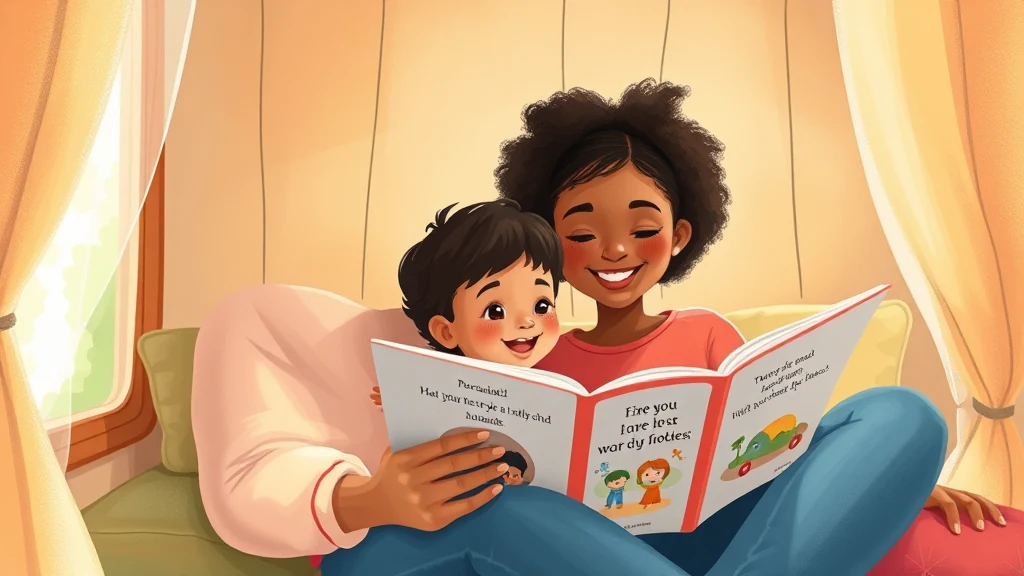
Navigating Blended Families: How Storytelling Helps Kids Process Big Changes
Do you remember the feeling? Not the big, dramatic, movie-moment change, but the little, thick, heavy feeling that hangs in the air after a big announcement. The announcement of a new partnership, the idea of a blended family, or even just a new routine with a new set of rules.
For a child, the world feels like a series of constant variables-and variables are scary. Their entire sense of security is built on predictability: the same bedtime routine, the same favorite stuffed animal, the consistent presence of the people they love. When that predictable structure dissolves, even when the change is fundamentally good, the underlying emotional current can feel confusing, anxious, and downright overwhelming.
As parents, we are often swept up in the excitement and the sheer logistics of building this new “normal.” But we sometimes forget to validate the emotional chaos the child is experiencing. They aren’t rejecting the new chapter; they are reacting to the loss of the old one.
Why is the change so emotionally complicated for children?
It’s not just that things are different; it’s that their core understanding of the world has been temporarily shaken. A blended family means merging two separate histories, two sets of traditions, and two unique family identities into one new shape. For the child, it can feel like they are standing on shifting ground.
What they often miss is that their feelings-the sadness, the jealousy, the quiet confusion-are not about you or the new person. They are about the natural emotional turbulence that accompanies any fundamental shift in the family ecosystem.
This is where the magic of storytelling steps in.
How Can Storytelling Help Process Big Family Changes?
Storytelling is perhaps humanity’s oldest and most potent tool for emotional regulation. It gives us a safe, predictable container for things that feel wildly unpredictable in real life.
When we read stories-especially ones that are deeply personal-we are engaging in emotional rehearsal. We allow the child to practice identifying big feelings (like jealousy or displacement) in the character, rather than feeling those feelings entirely alone.
The beauty of a personalized narrative is that it takes those universal emotional lessons and makes them uniquely ours. Instead of reading about “siblings who argue,” you can read about your child, your sibling, and the specific conflict that feels real in your house right now. It validates the unique experience of your family, making the big feelings tangible enough to name and, eventually, manage.
When you’re ready to turn these complex family moments into a personalized narrative that validates your child’s unique experience, you can start your book in the studio.
The Power of Predictability in a New World
One of the biggest emotional needs in a blended family is a sense of continuity. Everything is new-the new furniture, the new routine, the new voices in the house. Our brains, especially developing ones, crave patterns.
A personalized story gives the child a narrative anchor. By framing the big change-the move, the new baby, the new partner-as a journey within a story, we give it a defined beginning, middle, and end. The characters solve the problem. The journey has a conclusion. This structure provides a sense of control that the real-life chaos often strips away.
If you want to explore more about how literature helps kids process big life moments, check out our guide on navigating family changes in storytime.
🌟 Quick Tip for Parents:
- Don’t minimize feelings: When your child expresses sadness about the change, don’t say, “You’ll get used to it.” Instead, say, “It is okay to feel sad that the routine is changing. I hear you.”
- Use ‘I’ statements: When talking about new dynamics, focus on your feelings: “I am really excited about having more family time,” rather than, “You need to get along with them.”
- Journal the transition: Writing down the new family routines helps you process, and that emotional calm is what your child absorbs.
How Do Personalized Stories Build Emotional Resilience?
Personalized stories don’t just tell the child what happened; they help them understand why it feels the way it does. They offer a scaffold for emotional vocabulary.
Instead of just saying, “You were upset,” the story can help the child understand: “You felt displaced because your play spot changed,” or, “You felt excluded when we were talking about the new job.” This specific language is gold.
This emotional vocabulary is key to building resilience. It turns an abstract, difficult emotion into a learnable concept.
Why is self-reference so powerful?
It comes down to the psychological concept of self-reference. When a child sees themselves as the capable, resourceful hero overcoming a genuine, family-specific challenge, their self-efficacy (the belief in their own ability) skyrockets.
The story becomes: “My unique experience matters. I am resilient. I am capable.”
This affirmation is profoundly comforting and is arguably more valuable than any toy or treat.
📚 Deepening the Bond with Books
Creating a shared, meaningful story is one of the most powerful acts of bonding. It tells the child: “Even when the world changes, the story of our family-you-is safe, and we are writing it together.”
If you are interested in learning how personalized narratives deepen family connections during these times, you might find our guide on personalized books for family bonding and parenting helpful.
Actionable Tips: Using Stories During Transition Periods
It’s natural to feel overwhelmed by the endless list of parenting tasks-scheduling, communicating, remembering everything. But remember that intentional story time can be a powerful, low-stress ritual.
Here are a few ways to integrate narrative during moments of change:
- The “Before & After” Story: Narrate the family life before the change, focusing on the positives, and then narrate the anticipated new routine. This acknowledges the past while building excitement for the future.
- The “Magic Object” Story: Give your child a physical item (a stone, a leaf, a blanket) and build a story around it that symbolizes the new family unit. The object becomes the tangible focus of the change.
- The “Solution” Story: If the change involves a specific challenge (e.g., sharing a parent’s time), build the story around the character finding a creative, collaborative solution.
Ultimately, the goal isn’t to fix the blending of the family-that’s life’s messy, beautiful reality. The goal is to give the child the language and the safe, imaginative space to process it.
This journey of figuring out the new normal is a massive, beautiful project. When you’re ready to harness the power of personalized stories to narrate your family’s unique chapter, remember that making a custom story for your child is just a few clicks away.
Summary: Key Takeaways for Parents
- Acknowledge the Grief: Any big change involves a form of loss. Validate the sadness or confusion first.
- Story as a Container: Stories provide a safe, structured environment for complex, real-life feelings.
- Focus on “Why”: Don’t just focus on the new routine; focus on why the new routine feels important to the family.
- Celebrate the Effort: When reading, point out the child’s own qualities and strengths in the story.
The memories that emerge from these complex, transitional periods are powerful. By giving those memories a narrative framework, you aren’t just telling a story-you’re building a foundational sense of security, resilience, and love for the family that is, right now.