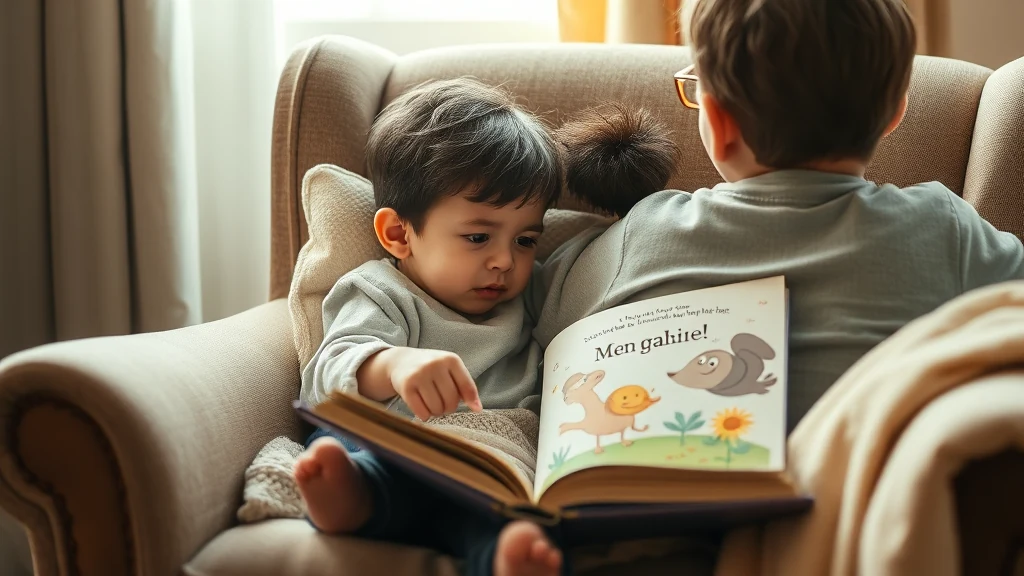
How Personalized Stories Teach Kids About Feelings Like Sadness and Disappointment
The air feels thick, doesn’t it? It’s that quiet, heavy weight that settles in after something disappointing happens. Maybe it was a birthday party with a canceled bouncy house, or maybe it was simply the realization that a favorite toy had broken.
You know the feeling when your child reacts to it-the sudden slump of the shoulders, the tears that feel too big for their little body, the frustration that bursts out as a yell. As parents, our first instinct is often to try and fix the feeling. “Don’t cry,” “It’s okay,” or “Look at the silver lining.”
But the problem with big emotions-sadness, disappointment, frustration, jealousy-is that they don’t come with instruction manuals. They are huge, messy, physical feelings that are hard to name, and even harder to process.
We spend so much time reading about boosting vocabulary or developing critical thinking. And those skills are vital. But sometimes, we focus so much on the logic of feelings that we forget the magic of the emotional journey itself.
This is where the simple act of storytelling becomes profoundly important.
Why is it Hard for Kids to Understand Big Feelings?
For a young child, an emotion like disappointment isn’t an abstract concept; it’s a physical, visceral experience-a knot in the stomach, a sudden temperature drop. If they can’t name it, they can’t regulate it.
Developmental science shows us that children learn about the world by categorizing experiences. When they encounter a strong emotion, their brains aren’t equipped to just label it and move on. They need a model. They need to see that the feeling is normal, universal, and, most importantly, temporary.
If the only models they see are “be happy” or “get over it,” they learn that negative emotions are failures.
The goal of childhood emotional education isn’t just to make them happy; it’s to give them a vocabulary for the full spectrum of human experience, especially the difficult parts.
Quick Tip: Before the Book
- Name it out loud: Instead of just hugging them when they cry, try saying: “I see you are feeling really disappointed right now. That big feeling is sadness.”
- Validate the body: Connect the feeling to the body. “Your tummy feels wiggly because you’re angry.” This helps ground the abstract emotion.
- Use mirror play: When talking about feelings, mirror the expression (safely, without mockery) to help them connect the emotion to the facial muscle.
How Can Stories Teach Emotional Intelligence?
The magic of narrative is that it gives us distance. When we read a story, we are safe enough to experience high emotion without the actual consequences. We can feel the pang of loss with a fictional character, and realize: Ah, the sadness is part of the story, but it is temporary.
This process of externalization-taking the feeling out of their core and placing it inside a character-is incredibly therapeutic.
Stories do several things that can’t be achieved through simple conversation:
1. They Normalize the Spectrum: When a character fails at something, or when a family has a difficult disagreement, the child sees that failure and conflict are built-in parts of life. They learn that “it’s okay to feel bad.”
2. They Provide Emotional Blueprints: Storybooks are powerful tools for teaching emotional literacy. They don’t just say, “Be empathetic.” They show a character realizing, “Wait, they are sad because I missed the deadline.” This teaches perspective-taking, which is the bedrock of empathy.
3. They Offer Agency in Safety: In a personalized book, your child is the hero. If they are exploring disappointment, the story can show them how to respond-maybe they learn that the disappointment of a cancelled event can lead them to organize a better, equally fun plan themselves. They get to practice resilience in a safe, tailored narrative.
If you’re ready to help your child process a current emotional challenge-whether it’s a big move, a sibling rivalry, or just the frustration of losing a game-and turn that experience into a lasting narrative, you can start a personalized storybook today.
Why is Personalization Key to Emotional Growth?
A generic picture book about sadness is helpful, but a book where your child is the one who overcomes the feeling is transformative. It taps into a powerful psychological principle: self-reference.
When a child reads about themselves feeling frustrated, they are not passively observing; they are seeing proof that their own inner experience is valid, important, and writable.
This deep sense of self-validation is crucial for emotional health. It tells them: “Your feelings matter. They are worth telling, and they are worth seeing.”
This goes beyond simple character development; it fundamentally impacts their sense of self-worth. You can learn more about this powerful connection in our guide on how personalized books impact emotional development and self-confidence.
Quick Tip: Using Stories Beyond the Read
- The ‘Feelings Review’: After reading, don’t just ask, “How was the story?” Ask, “What did you feel when [Character Name] failed?” or “How did you feel when you saw [Character Name] finally realize their friend was sad?”
- Journaling Prompts: Use the story as a jumping-off point for drawing or writing. “If you were the character, what would you do next?”
- The Emotional Toolkit: Create a physical “feeling box” and fill it with objects (a feather for lightness, a stone for grounding, etc.) to reference when the big feelings come up.
More Than Just Words: The Lasting Value of Personalized Stories
Some parents are rightfully skeptical of fancy technology and AI. They wonder if this is just a fad, or if printed storybooks-the ones read from the physical pages-are still best.
The beautiful truth is that personalized books are neither a fad nor a replacement for human connection. They are a magnifier of it. They take the already powerful, wonderful experience of parent-child reading and give it depth, permanence, and unique meaning.
The story becomes a tangible family artifact-a record of who they were, how they felt, and how they learned to handle the messy, wonderful reality of being human.
If you are planning to make a milestone memory or just want a deeply thoughtful gift, checking out our ultimate personalized book gift guide can give you some ideas!
We believe every child’s story-and every family’s journey-is unique, rich, and worthy of a personalized chapter.