You’re standing in the kitchen, and your child is pulling at your sleeve for the tenth time in five minutes.
“How much longer?” they ask-not just about dinner, but about everything. How much longer until we leave? How much longer until bedtime? How much longer until the weekend?
As parents, we know that “time” is one of those abstract concepts that feels like a magic trick to a child. To us, an hour is a block of time; to them, it’s an infinite, stretching void. They don’t have a mental map for how long sixty minutes actually feels, which is why “five more minutes” can feel like an eternity of waiting in the “now.”
Why is time so hard for kids?
For young children, life happens in the present moment. Their brains are still developing the cognitive ability to project themselves into the future or reflect on the past with precision. When you say, “We’re going to the park in an hour,” their internal clock doesn’t have a way to measure that hour-it just feels like forever.
This isn’t a lack of discipline; it’s a developmental stage. They lack the “temporal literacy” to understand how small moments stack up to make a big chunk of time. Because they can’t see the “distance” in time, transitions (like getting into the car or stopping a favorite game) often trigger anxiety or meltdowns.
How can we bridge the gap?
Since we can’t give them an adult brain overnight, we have to build “bridges” of understanding. Here are some ways to make the invisible visible:
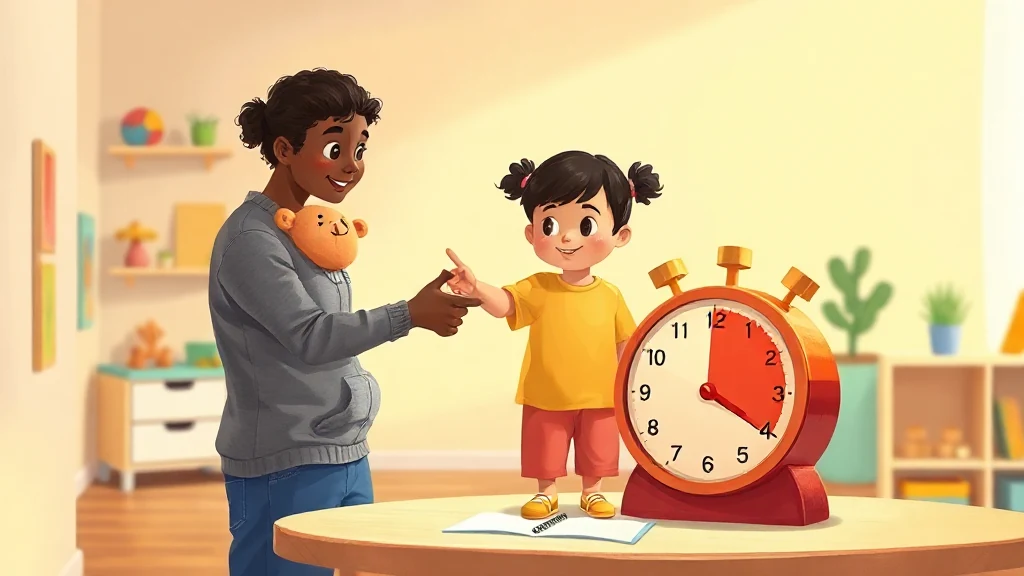
- Use Visual Timers: Instead of just saying “ten minutes,” use a physical timer or a visual clock where they can see the red slice of time disappearing.
- Break it into Milestones: Instead of “We’re going to the park in an hour,” try, “First we put on your shoes, then we grab your bag, and then we walk to the car.”
- Use Comparative Language: Relate time to their world. “We have enough time for three more songs” or “until the sun goes down behind that tree.”
Turning ‘Waiting’ into an Adventure
This is where the magic of storytelling comes in. When a child feels anxious about waiting, it’s often because they feel powerless over the time passing. We can change that by giving them a sense of agency through narrative.
If they are struggling with the “how long” of a transition, you can create a story where they are the hero navigating a journey of patience. You can start your book in the studio to craft a tale about a character who learns to master the “magic of time.”
By turning the concept into a quest, they aren’t just waiting for the clock; they are moving through a story. For example, if they struggle with getting ready in the morning, a personalized book can take them on a journey where they gather “magical items” (their clothes and breakfast) to prepare for their daily adventure.
Quick Tip: If your child is struggling with specific transitions, try using “Story-Mapping.” Before an event, tell a 2-minute story about what will happen: “First we will do X, then we will see Y, and finally we will reach Z.” This gives them a mental roadmap.
Why it matters for the long haul
Developing a sense of time is foundational for executive function. It helps with self-regulation, planning, and eventually, academic success. When children feel like they have a handle on “when” things are happening, their anxiety levels drop significantly. They move from being frustrated by the “wait” to feeling prepared for the “next.”
If you want to dive deeper into how stories can help with these transitions, check out our guide on how personalized books can help kids manage childhood anxiety.
Ultimately, the goal isn’t to make them perfectly punctual by age five-it’s to give them the tools to feel secure in the flow of their day. By using personalized stories, you aren’t just giving them a book; you’re giving them a way to visualize their world and find confidence in it.
Ready to create your child’s next adventure? Create a personalized story for your child here and turn their daily routines into legendary tales of bravery and discovery.