What Ages Are Personalized Children’s Books Suitable For?
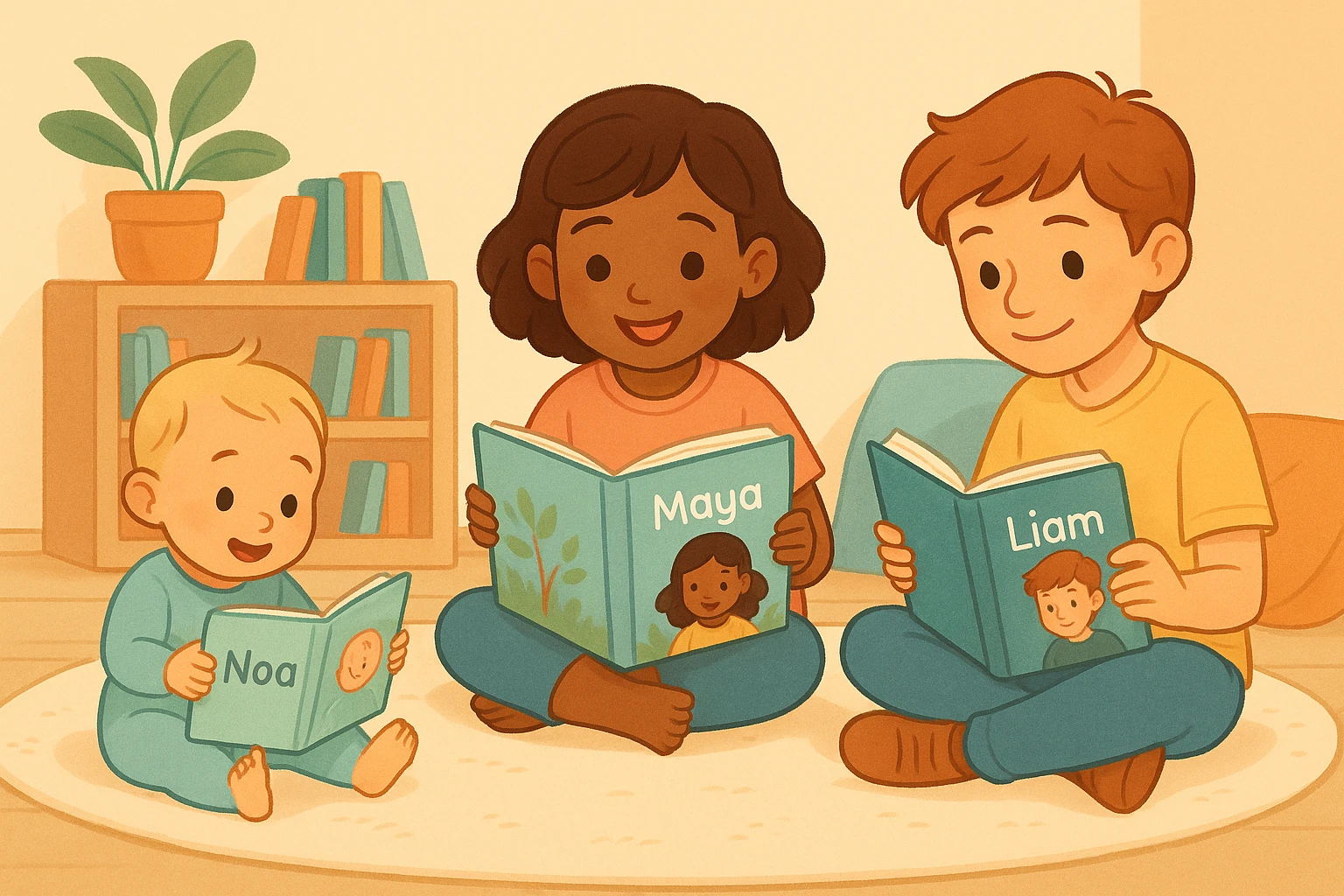
Personalized children’s books are surprisingly suitable for a wide age range - from the youngest toddlers to older children, and even young teenagers. Of course, the nature of the content and presentation style vary according to age to ensure the book is engaging and understandable for the young target audience.
Early Childhood (Ages 2-4)
Simple and Clear Structure
For the youngest children (around ages 2-4), personalized books are built in a simple and clear way. The text is short, the language is basic and full of repetition, and the emphasis is on colorful, large illustrations and familiar elements (like toys, animals, or close family members in the story).
At these ages, the main goal is to spark excitement and enjoyment - the child hears their name repeatedly, sees illustrations that remind them of themselves, and gets excited about the idea that they’re part of the story.
Age-Appropriate Language
Personalization platforms automatically adapt the story’s language to the comprehension level of toddlers, with short sentences and simple words. For example, an adventure book for a 3-year-old will focus on a simple adventure (“Liam goes to the zoo”) with basic language, while the same topic for an 8-year-old will be more developed with a richer plot.
Preschool and Early Elementary (Ages 5-8)
Expanding Complexity
At preschool and lower grades (5-8), it’s possible to start expanding story complexity. Children at these ages still very much enjoy seeing themselves as heroes, but they’re also capable of following a slightly more intricate plot and understanding social or educational messages integrated into the story.
A personalized book for a 7-year-old, for example, can contain a fantasy plot where the child saves the kingdom - a story with short chapters, clear beginning-middle-end, and interesting supporting characters. The language is age-appropriate - not too babyish, but still accessible - and vocabulary is slightly richer.
Older Children (Ages 9+)
Complex Narratives and Educational Content
For older children, ages 9 and up, including early middle school, personalized books can take a different direction. Here it’s possible to incorporate more complex plots, longer chapters, and even detailed educational content (like a personalized science fiction book teaching scientific principles, or a historical story taking place in a specific period with the child as a character).
Some platforms offer personalization up to teenage years, adapting the writing style and story background to the more mature reader. For example, a 13-year-old science enthusiast might enjoy a personalized book where they star as a researcher traveling through time to meet great scientists - a story written at a higher language level suitable for teenagers.
Platforms Supporting Wide Age Ranges
Indeed, there are platforms (like Make My Book) that allow personalization even up to ages 18-20, though it’s clear that at these ages the books tend to be more sentimental gifts or keepsakes, and less “children’s books” in the classic sense.
The Common Thread: Personal Connection Across Ages
In summary, a personalized book can be adapted to almost any childhood age, as long as the content is presented in an appropriate form. Success lies in the story “meeting” the child where they are in terms of language, interest, and attention span.
The personalization magic - the child’s name, appearance, hobbies - works its charm at every age, just in different ways. A toddler will be excited to hear their name and a simple story about their daily routine, while an older child will appreciate an exciting plot where they’re a brave hero.
What’s common to all ages is the sense of belonging and engagement that personalized books provide - an ageless value that speaks to every child.
Personalized books adapt to children’s developmental stages, ensuring that whether a child is 2 or 12, they find content that’s appropriate, engaging, and personally meaningful. This adaptability is one of the key strengths of personalized books, making them valuable tools across the entire childhood journey.