What Makes a Personalized Children’s Book High Quality
Like any children’s book, personalized books come in different quality levels. An excellent personalized book provides both an engaging and meaningful story for the child, as well as smooth and authentic personalization that feels natural. Here are several characteristics and tips to help identify a high-quality personalized children’s book.
Well-Written, Age-Appropriate Story
Compelling Narrative Structure
A quality book will include an interesting, flowing, and well-constructed plot - not just a list of events around the child’s name. It’s important that the story itself be captivating, with a beginning, middle, and end, convincing characters, and a positive message or added value.
Language Level Matching
Additionally, the language level and text should be adapted to the reader’s age. A quality book for toddlers will present short sentences, simple words, and amusing rhymes or repetitions, while a book for an older child will contain richer language and a more developed plot accordingly.
Appropriate Messages and Values
Also pay attention to the nature of the messages - good books skillfully weave in values like friendship, courage, tolerance, and perseverance in a way that suits children’s understanding.
Natural Integration of Child’s Details
Organic Personalization
An important quality measure is how the child’s personal details are “integrated” into the story. In lower-quality books, sometimes it feels like the child’s name was simply swapped technically for character names without real adaptation. In contrast, a quality book will weave the child’s details organically into the plot.
Meaningful Personal Elements
For example, not only will the first name appear, but perhaps also mention of the child’s favorite hobby, the city where they live, a friend’s or sibling’s name - and all in logical places in the story. When the young reader hears in the first chapter that the hero lives in their city and has a dog named Bobby - these are details that immediately create a personal connection. A good book will incorporate such elements without feeling forced or artificial.
Professional and Adapted Illustrations
Visual Quality
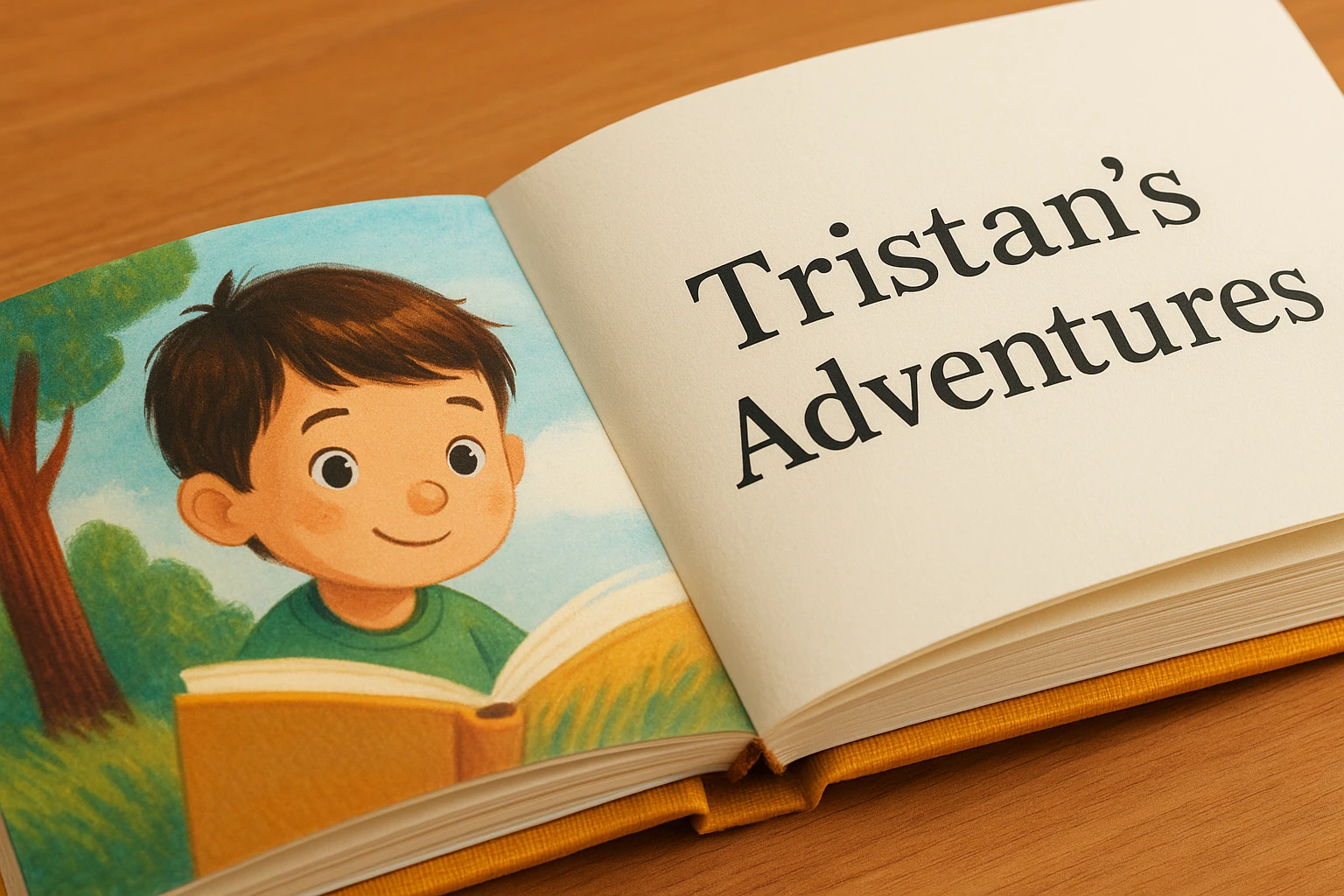
Visualization is a central part of a children’s book experience. Therefore, illustration quality is no less important than the text. In a quality personalized book, the illustrations will be attractive, colorful, and in a style suitable for children’s eyes - all while being adapted to the child’s character as the hero.
Character Representation
Some books even allow adjusting the character’s appearance (skin color, hair, clothing) so it resembles the child themselves. Even if the adaptation doesn’t reach facial accuracy, at least it’s important that the child feels the character represents them (if a girl has brown hair - the heroine shouldn’t be blonde, and so on).
Consistency and Technical Quality
Check that the illustrations are of good print quality and consistent throughout the book. Advanced platforms today even create unique illustrations for each book and don’t rely only on ready templates - meaning each image is adapted to the scene in your child’s story. This is a hallmark of a quality personalized book, as it shows investment in personalization down to the smallest details.
Quality Print Materials and Production
Physical Book Standards
If you’re ordering the book as a physical copy, also pay attention to print and binding quality. A good personalized book will be printed on thick, durable paper (preferably quality chromium paper or equivalent), in hard or soft cover according to your choice, with sharp color printing.
Production Values
A poor-quality book might be printed amateurishly (thin pages, faded colors, falling-apart binding). Most leading companies offer a print level very close to that of regular shelf books - and sometimes even unique options like a personalized dedication printed on the first page, which adds points to quality and prestige.
Multilingual and Cultural Adaptation
Authentic Translation
For bilingual families or those seeking a book in a language other than English, quality can also be expressed in good support for different languages. A quality book will be well-translated (not with garbled machine translation) and will consider cultural sensitivities - for example, character names and contexts will be logical in the target language.
Cultural Sensitivity
Platforms like Make My Book, for example, support several languages and know how to adapt the story linguistically and culturally for each language, and this is an advantage that testifies to the level of investment and quality.
Quality Control and Support
Customer Service
A final but important characteristic - a quality personalized book comes from a body that insists on quality control and customer support. This means there’s someone to turn to if there’s an error in the name or illustrations, and there’s willingness to fix and improve.
Preview Functionality
A quality platform will allow you to view a preview of the book before purchase, and perhaps even fix details before printing. Available customer service and a satisfaction policy (for example, a promise to fix the book if something isn’t to your satisfaction) indicate that even after creating the book, quality matters.
Evaluating Overall Value
Holistic Assessment
When evaluating a personalized book, consider the complete package:
- Story quality: Is it engaging enough to read repeatedly?
- Personalization depth: Does it go beyond just inserting a name?
- Visual appeal: Are the illustrations engaging and appropriate?
- Production value: Does the physical product feel substantial?
- Cultural appropriateness: Does it respect and represent diversity?
- Customer experience: Is the ordering process smooth and support available?
Long-term Value
A truly quality personalized book isn’t just a one-time novelty but something that becomes a cherished keepsake. It should be a book the child wants to return to again and again, not because of the personalization gimmick alone, but because it’s genuinely a good story well told.
Red Flags to Watch For
Signs of Poor Quality
Be cautious of:
- Generic content: Story feels like a template with names swapped
- Poor grammar or awkward phrasing: Indicates lack of editorial oversight
- Inconsistent illustrations: Characters look different from page to page
- Limited customization options: Only allows name insertion
- No preview available: Can’t see the book before purchasing
- Poor customer reviews: Others report quality issues
Making the Right Choice
Research Before Purchasing
Take time to:
- Read reviews from other parents
- Check sample pages if available
- Compare options across platforms
- Understand what level of customization is offered
- Verify the return/satisfaction policy
Start with Digital
Consider ordering a digital version first to evaluate quality before committing to a more expensive printed edition. This allows you to assess the story and personalization quality at minimal cost.
The Bottom Line
In summary, a quality personalized children’s book will stand out thanks to a captivating age-appropriate story, smooth incorporation of the child’s unique details, beautiful and adapted illustrations, and an overall high-level product experience (in terms of printing and service).
When all these components come together, the result is a personalized book that will be not only a moving memento but also an enjoyable and valuable children’s book in its own right - one that the child will want to return to again and again.
A well-made personalized book represents the perfect intersection of technology, storytelling, and personal connection, creating something truly special that celebrates the child as the hero of their own adventure.
Quality in personalized books isn’t just about the technology used to create them, but about the care, creativity, and attention to detail that goes into making each one feel genuinely special and professionally crafted.