Why Do Children Get Excited to See Themselves as Characters in Stories?
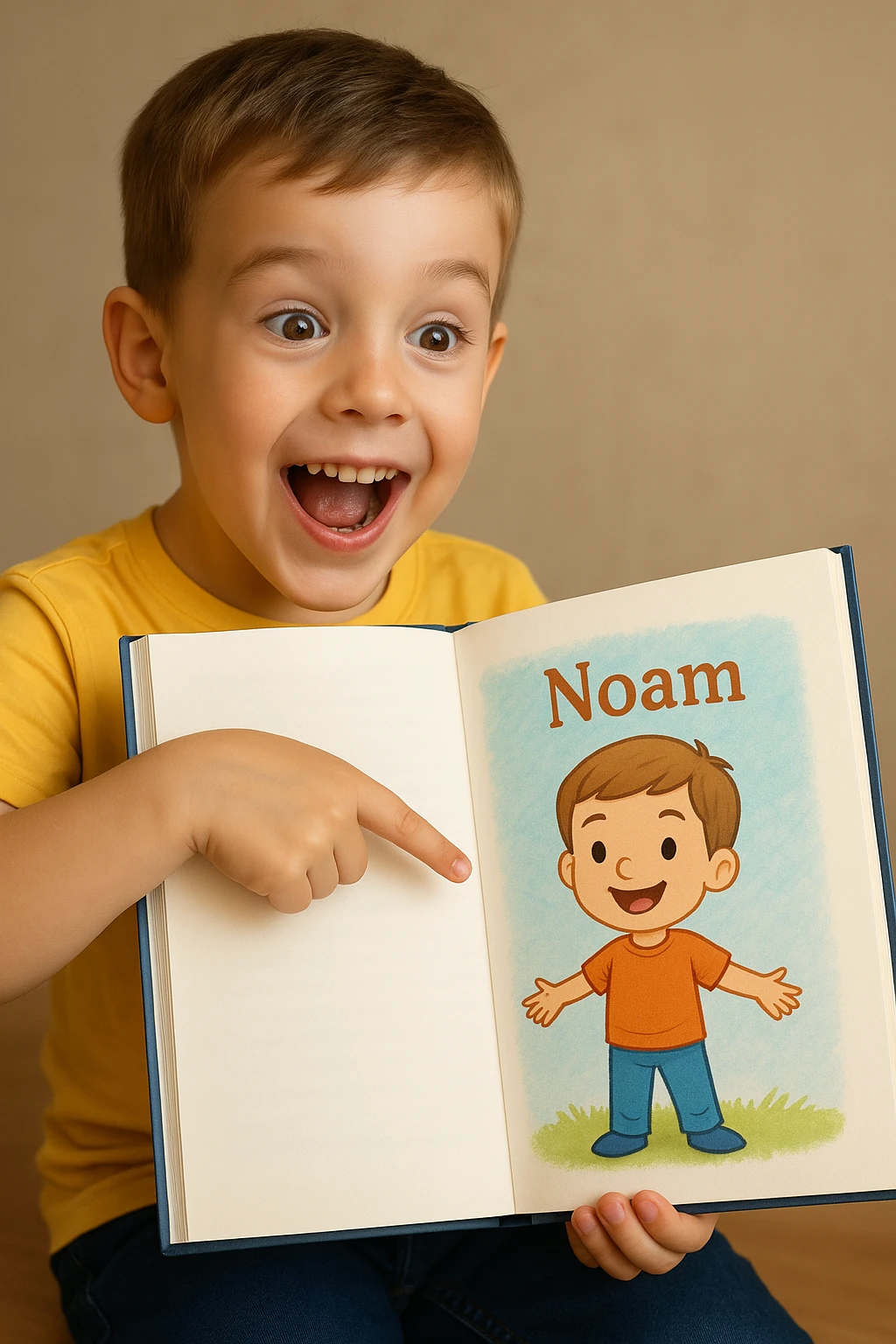
Many parents who have experienced this can attest: The moment a child recognizes their name or their character in a book, something magical happens - their eyes light up with excitement. There’s a natural explanation for this phenomenon, rooted in psychology and child development.
The Psychology of Personal Recognition
The Cocktail Party Effect in Children
Children, like adults, love personal recognition. Hearing their name or seeing something familiar to them (like a favorite toy or their city of residence) immediately captures their attention. In psychology, this is similar to the “cocktail party effect” in adults, where a person picks up their name from background noise.
In children, this effect is even stronger and more innocent: They’re thrilled to discover their private world becoming part of a magical story. This personal connection creates immediate emotional engagement that standard books cannot match.
Research Evidence: Measurable Excitement
Scientific Observations
Studies and observations clearly show how exciting this experience is for children. In one study, when kindergarten children were read personalized stories featuring their names, the children demonstrated more smiles, laughter, and cooperation during reading compared to reading a standard children’s book.
Children responded with exclamations like “That’s my name!” or “That’s me in the story!” and actively participated in the plot - for example, correcting the adult if they skipped the child’s name, or enthusiastically pointing to illustrations featuring characters resembling them.
High Engagement and Motivation
Researchers who observed children reading personalized books alongside their parents confirmed that children show particularly high engagement and motivation for reading when the story is “about them.” In fact, children are so absorbed and captivated that sometimes they don’t even notice they’re practicing language and reading skills - to them, it’s a personal adventure.
The Power of Being the Hero
Why This Excitement Occurs
The reason for the excitement is clear: How many books allow a child to be the actual hero of the story? For a child, seeing a character with their name, or an illustration that reminds them of themselves, gives an enormous sense of importance and satisfaction. The book seems to tell them: “You are special, this story is yours!”
This feeling can empower even shy children or those who typically struggle with reading. Suddenly they’re eager to hear more, ask questions about what happens to them in the story, and even “read” themselves through pictures because the story feels close to them.
Self-Importance and Validation
Simply put, children get excited to see themselves in a story because it’s an experience that validates their world and ignites their imagination - they’re no longer passive observers of the plot, but its main stars. It’s no surprise, then, that many children ask to read again and again the book where they appear. For them, it’s not just one book among many, but “my story.”
The Long-Term Impact
Sustained Interest
This excitement is exactly what parents and educators hope for - a happy, engaged, and active child during reading time. Personalized books successfully provide this spark, which is why children love them from the first moment they recognize themselves between the pages.
The personal connection creates a deep emotional bond with reading that extends beyond the initial excitement. Children who see themselves as heroes develop positive associations with books and reading that can last a lifetime.
When children see themselves as characters in stories, they’re not just reading - they’re experiencing validation, importance, and empowerment. This personal recognition taps into fundamental psychological needs for identity, belonging, and significance, creating an excitement that transforms reading from a task into a thrilling personal adventure.